Why is my dog licking his paws constantly? If you’ve noticed your dog licking excessively, you’re definitely not alone.
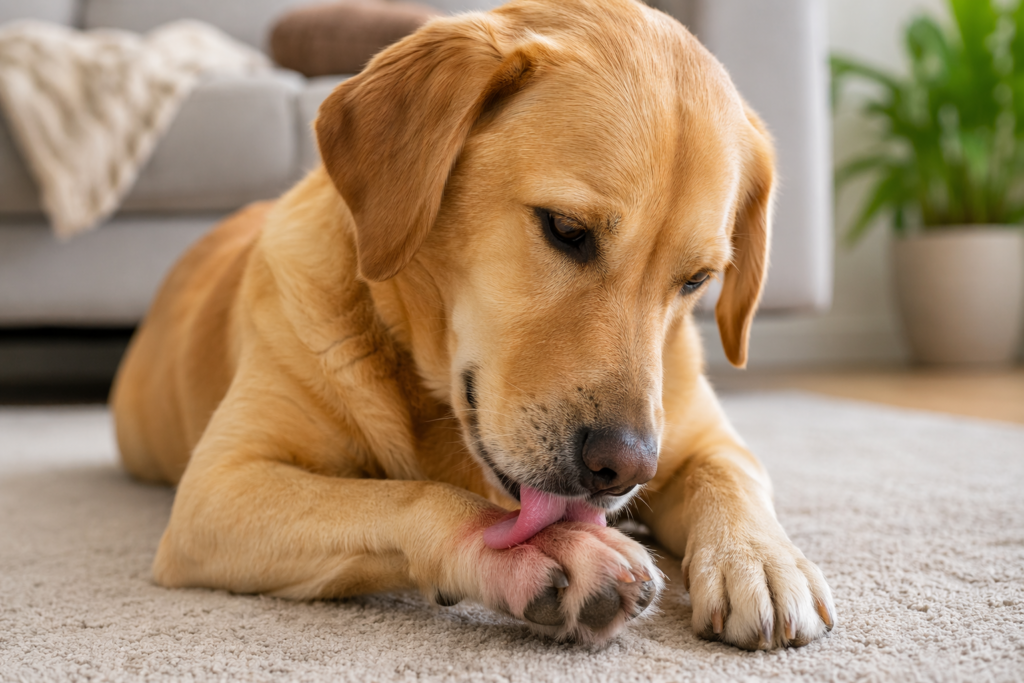
While occasional paw licking is completely normal, excessive licking can be a sign that your dog is uncomfortable, itchy, stressed, or even in pain.
In many cases, dogs lick their paws to soothe irritation caused by allergies, anxiety, infections, or small injuries that owners may not notice right away.
The good news is that understanding the cause early can help prevent bigger problems later.
In this guide, you’ll learn the most common reasons dogs lick their paws, when it becomes a concern, and what you can do to help your dog feel more comfortable.
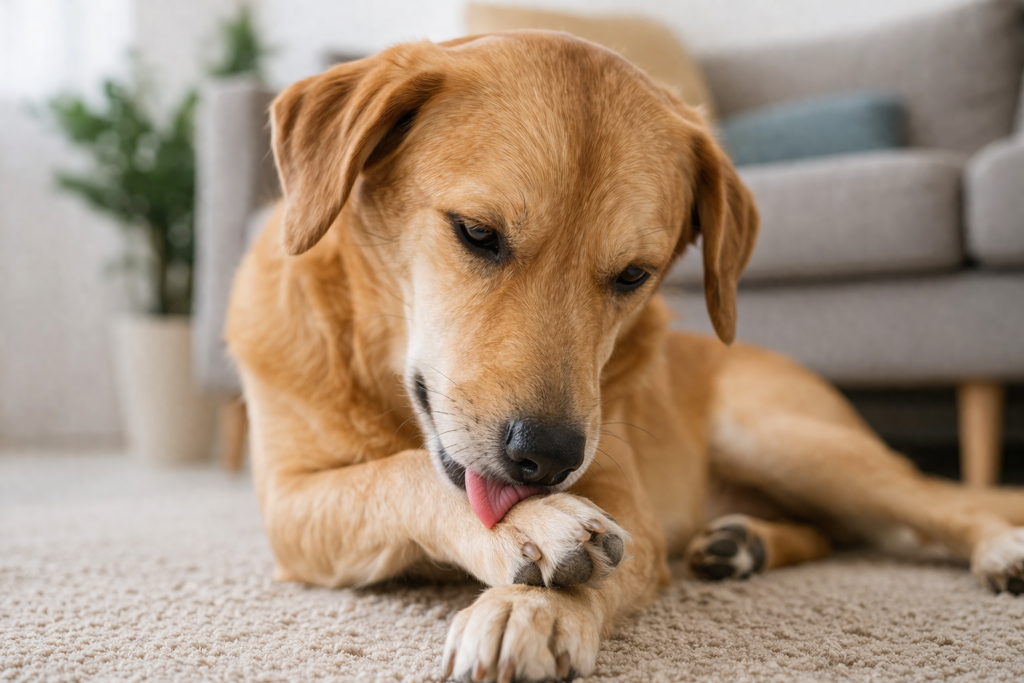
Is It Normal for Dogs to Lick Their Paws?
Yes—dogs naturally lick their paws to clean themselves.
However, excessive licking (especially daily, nonstop, or obsessive behavior) is not normal and often points to discomfort or irritation.
Why Is My Dog Licking His Paws? 5 Common Causes
1. Allergies
Allergies are one of the most common answers to why is my dog licking his paws. Dogs may react to food, pollen, dust, or grass, according to the American Kennel Club.
Environmental allergies often cause itchy paws, and licking is your dog’s natural way of trying to relieve that discomfort.
]If you notice your dog licking more during spring or summer, seasonal allergies are likely the cause.
2. Pain or Injury
Another reason why is my dog licking his paws is pain or injury. Cuts, splinters, broken nails, or joint pain can make dogs lick to soothe discomfort.
Always check between the paw pads for debris, small wounds, or swelling that might not be immediately visible.
3. Infections or Parasites
Bacteria, yeast infections, or parasites like mites can irritate the skin between your dog’s paw pads.
When wondering why is my dog licking his paws obsessively, a yeast infection is often the culprit — it causes a strong odor and reddish-brown staining between the toes.
4. Anxiety or Stress
Some dogs lick their paws as a way to self-soothe when they feel anxious, bored, or stressed.
Dogs experiencing stress may also show behaviors like whining excessively — read our guide on why dogs whine to understand the connection.
This behavior is especially common in dogs with separation anxiety or dogs that don’t get enough mental stimulation during the day.
Dogs dealing with stress may also develop destructive habits like chewing things when left alone — a behavior closely connected to separation anxiety.
In some cases, paw licking can become a repetitive comfort habit over time.
5. Dirty or Irritated Paws
Chemicals on sidewalks, extreme heat, salted roads in winter, or rough surfaces can all irritate your dog’s paws and trigger licking.
This is one of the simplest causes of why is my dog licking his paws — and also one of the easiest to prevent with regular paw cleaning after walks.
Signs Your Dog’s Paw Licking May Be Serious
- Redness or swelling
- Limping or sensitivity
- Constant licking or chewing
- Open sores
These can indicate a medical issue that needs attention.
How to Help a Dog That Keeps Licking Its Paws
1. Check paws for cuts or debris
2. Clean and dry after walks
Many dog owners also find that gentle hypoallergenic paw wipes help reduce licking caused by pollen, dust, or outdoor irritants — especially after walks or during allergy season.
Keeping your dog’s paws clean is one of the simplest ways to reduce dog licking paws caused by allergies or irritation. Regular cleaning helps remove dirt, pollen, and other triggers that may be stuck between the paw pads.
3. Reduce exposure to allergens
4. Keep your dog mentally stimulated
Sometimes, small daily habits can make a big difference. For example, wiping your dog’s paws after walks can help remove allergens like pollen or dust. Keeping your home clean and minimizing exposure to irritants may also reduce licking behavior.
If your dog tends to lick more during certain seasons, allergies could be the cause. In these cases, paying attention to patterns can help you identify triggers more quickly.
Providing enough mental and physical stimulation is also important. Dogs that are bored or anxious may develop repetitive behaviors like paw licking. Regular walks, playtime, and interactive toys can help reduce this habit.
Best Products to Help With Dog Paw Licking
If your dog licks their paws due to anxiety, boredom, or irritation, the right products can make a big difference in their daily comfort.
The Hyper Pet Lick Mat is one of the most effective tools for redirecting anxious licking — simply spread peanut butter or yogurt on it and let your dog enjoy a calming activity that keeps their mind busy.
The AWOOF Snuffle Mat is another excellent option that provides mental stimulation and helps reduce repetitive behaviors like paw licking caused by boredom or stress.
For dogs that lick their paws due to allergies or outdoor irritants, gentle hypoallergenic paw wipes used after every walk can significantly reduce the triggers that cause why is my dog licking his paws in the first place.
When to See a Vet
If your dog keeps licking paws constantly despite home care, a veterinary evaluation is recommended.
If the licking becomes constant, causes wounds, or your dog seems uncomfortable or in pain, it’s important to seek veterinary advice.
Persistent licking is often linked to allergies, infections, or stress and should be evaluated.
In some cases, paw licking can become a habit over time. Even after the original cause is gone, dogs may continue the behavior out of routine. This is why early attention is so important.
You can also observe if your dog focuses on one paw or all of them. Licking a single paw may indicate a localized issue, while licking multiple paws is often linked to allergies or environmental factors.
Some dogs may also develop paw licking due to environmental changes, such as moving to a new home or changes in routine. Even small disruptions can create stress that leads to repetitive behaviors.
Another important factor is moisture. Dogs that frequently have wet paws—after walks, baths, or rainy days—may develop irritation that encourages licking. Keeping paws clean and dry can make a significant difference over time.
When addressed quickly, many causes of paw licking can be resolved before they become more serious.
Behavior changes like excessive licking are often one of the first signs that a dog is feeling uncomfortable or stressed.
Related Behavior You Might Also Notice
Dogs that lick their paws excessively often show other stress-related behaviors at the same time. If your dog is also licking you constantly, read our guide on why do dogs lick you to understand what they are trying to communicate.
If they follow you everywhere around the house, this could also be a sign of anxiety — learn more in our article on why dogs follow their owners everywhere.
And if your dog barks at night or whines frequently, these behaviors are often connected to the same emotional discomfort that causes why is my dog licking his paws during the day.
Final Thoughts
Occasional paw licking is usually harmless, but constant licking is often your dog’s way of signaling that something feels wrong.
Whether the cause is allergies, stress, irritation, or discomfort, paying attention early can help prevent more serious problems later.
By observing your dog’s behavior, keeping the paws clean, and addressing possible triggers, you can help your dog feel healthier, calmer, and more comfortable every day.
If you’ve been wondering why is my dog licking his paws, remember that early observation is key.
Understanding why is my dog licking his paws can help you act quickly, choose the right solution, and help your dog feel comfortable and happy again.

Andrea Frota is the creator of Dog In Focus, a blog dedicated to helping dog owners better understand dog behavior, training, health, and everyday care. Through carefully researched articles and practical guidance, Andrea shares helpful information to support responsible and confident dog ownership.