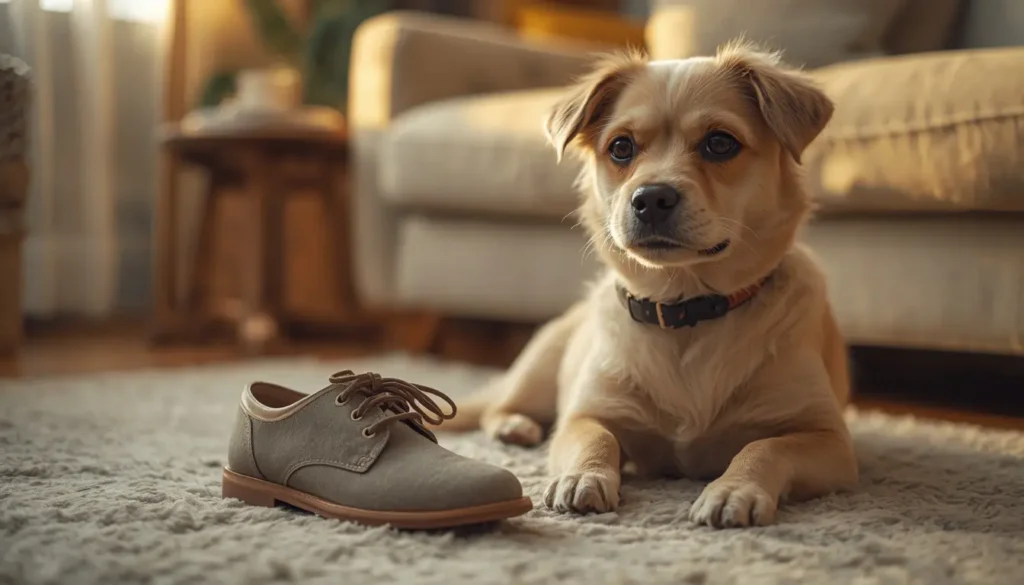
Separation anxiety vs. boredom — if you’ve ever come home to a chewed-up shoe or a knocked-over trash can wondering which one you’re dealing with, take a deep breath, friend.
You’re not alone, and you’re not a bad dog parent for wondering.
In fact, it’s one of the most common questions loving dog parents ask.
Here’s the thing almost nobody tells you: separation anxiety and boredom can look almost identical from the outside. Chewed furniture. Endless barking. Scratched doors. A living room that looks like a tiny tornado passed through. But underneath, they come from two completely different places — and if you treat one like the other, you can spend months trying to “fix” a problem that was never actually there.

Why This Mix-Up Happens So Easily
Why This Mix-Up Happens So Easily
A bored dog may bark while you’re gone. So may a dog with separation anxiety. Both can chew the furniture. Both can knock things over. Both can greet you at the door like you’ve been gone for a year.
From the outside, it’s the same mess, the same guilt, the same “what did I do wrong?” spiral.
But underneath, they come from two completely different emotions — and that one difference changes everything about how you help your dog.
💛 The behavior may look the same. The emotion behind it is what changes the solution.
Separation Anxiety vs. Boredom: The 9 Signs That Tell Them Apart
The 9 Signs That Actually Tell You Apart
This is where everything starts to make sense. Instead of asking, “What did my dog do while I was gone?” try asking, “What was my dog feeling?” That one question changes the way you look at every behavior.
- When the destruction happens. A bored dog’s mess is usually spread out, or comes in bursts of pent-up energy — often triggered by something exciting outside, like a squirrel or a delivery truck. A dog with separation anxiety tends to melt down in the first 15–30 minutes after you leave, then may settle… or may not settle at all.
- What they target. Bored dogs go for their own toys, or whatever’s lying around. Dogs with separation anxiety are far more likely to focus on exit points — door frames, window sills, the couch closest to where you always leave from — because their goal isn’t play, it’s escape, or getting closer to your scent.
- How they act before you even leave. This is the one I want you to really sit with. A bored dog says goodbye to you like it’s just… Tuesday. A dog with true separation anxiety often starts pacing, panting, whining, or shadowing you the moment they sense you’re about to leave (we talked about those departure cues last time!). If your dog is calm at the door but destructive by the time you’re home, boredom is more likely the culprit. If your dog is already distressed before you leave, it’s almost always anxiety.
- Physical signs of panic. Drooling, trembling, self-injury (bloody paws from scratching at doors), potty accidents from a fully house-trained adult dog, or non-stop howling — these point strongly to anxiety, not boredom. A bored dog rarely hurts itself trying to get out.
- How they greet you at the door. A bored dog is thrilled to see you and ready to play, plain and simple. A dog with separation anxiety can seem almost frantic — clingy, overly attached, still visibly stressed minutes after you’re already home.
- What happens after exercise. A tired, bored dog settles down fast after a good walk or play session. A dog with separation anxiety can stay wound up and anxious no matter how much energy they’ve burned — because exercise never was the problem.
- How they respond to food. A bored dog is easy to distract with a treat or a favorite toy. A dog in the middle of real panic will often ignore food completely — when a dog turns down something they normally love, that’s worth paying attention to.
- The sound of their distress. Bored barking tends to be intermittent — a few barks, a pause, maybe triggered by a noise outside. Anxious whining or howling is different: continuous, and it doesn’t let up, almost like they can’t stop themselves.
- How they handle confinement. A bored dog left in a crate or gated room might chew on a toy or eventually nap. A dog with separation anxiety often escalates in confined spaces — more panting, more pacing, sometimes trying harder to get out than they would in an open room.
If you’re already starting to recognize your own dog in a few of these, don’t rush to label them. You’re simply gathering clues — and that’s exactly what good dog parents do.
🐾 You’re not looking for a diagnosis. You’re looking for a pattern.
| 🥱 Usually Bored | 💔 Likely Separation Anxiety | |
|---|---|---|
| Destruction | Spread out, often toys or random items | Focused on escape routes — doors, windows, exits |
| When you return | Excited and ready to play | Panicked or still distressed minutes later |
| Root cause | Pent-up physical and mental energy | Genuine fear of being alone |
| After exercise | Settles down | Still anxious |
| Around food | Easily distracted | Often ignores it when panic starts |
Why Getting This Right Actually Matters
Imagine taking medicine for a headache when the real problem is a toothache.
It might seem to help for a little while—but it never solves what’s actually wrong.
The same thing happens when we confuse boredom with separation anxiety.
If you treat an anxious dog like they’re simply bored, both of you can end up frustrated.
But once you understand what your dog is really trying to tell you, choosing the right solution becomes so much easier.
No single behavior tells the whole story.
But when several signs point in the same direction, the picture usually becomes much clearer.
Don’t focus on one behavior. Look for the whole pattern.

If Your Dog Is Mostly Bored…
Good news—this is often the easier problem to solve.
A bored dog isn’t trying to make you feel guilty.
They’re simply looking for something meaningful to do.
Dogs were born to sniff, explore, chew, solve little challenges, and use their brains throughout the day. When those needs aren’t met, they often invent their own entertainment—and unfortunately, your favorite shoes or couch cushions sometimes become part of the fun.
The goal isn’t to tire your dog out completely.
It’s to give them healthy ways to use both their body and their mind.
Simple changes can make a remarkable difference:
- ✔ Longer sniff walks instead of faster walks
- ✔ Frozen enrichment toys
- ✔ Puzzle feeders
- ✔ Snuffle mats
- ✔ Five-minute training games
- ✔ Rotating toys every few days
Bella absolutely loves frozen KONG toys.
Instead of waiting by the door watching me leave, she now runs to her special toy because she knows something good is about to happen.
That tiny routine changed our goodbyes more than I ever expected.
⭐ Bella’s Favorite
This is the exact type of enrichment toy that became part of Bella’s “goodbye routine.” Instead of focusing on my departure, she started looking forward to something fun and rewarding.


If Your Dog Has Separation Anxiety…
Separation anxiety is a very different challenge.
An anxious dog isn’t looking for something to do.
They’re looking for you.
That’s why longer walks or extra playtime, while still important for overall well-being, rarely solve separation anxiety on their own.
What usually helps most is teaching your dog—very gradually—that being alone is safe.
This process is called desensitization, and it works by changing how your dog feels about your departures instead of simply trying to distract them.
It isn’t about forcing your dog to “get used to it.”
It’s about helping them build confidence, one tiny step at a time.
💛 Healing separation anxiety isn’t about teaching your dog to be alone. It’s about teaching them they’ll be okay when you leave.
When Bella first started struggling with my departures, I honestly had no idea where to begin.
Reading random tips online helped a little—but what finally gave me confidence was following one clear plan instead of trying ten different ones at once.
If you’re feeling overwhelmed too, having a step-by-step program can remove so much of the guesswork.
A Gentle Recommendation
If you’d rather follow a structured plan than piece everything together from dozens of articles, this is one of the most complete separation anxiety programs I’ve found.

And remember: every little step forward is still progress.
Still Not Sure Which One It Is?
Sometimes the biggest breakthrough comes from simply watching what your dog does when you’re not home.
Many of us assume we know what’s happening—but we’re only seeing the aftermath.
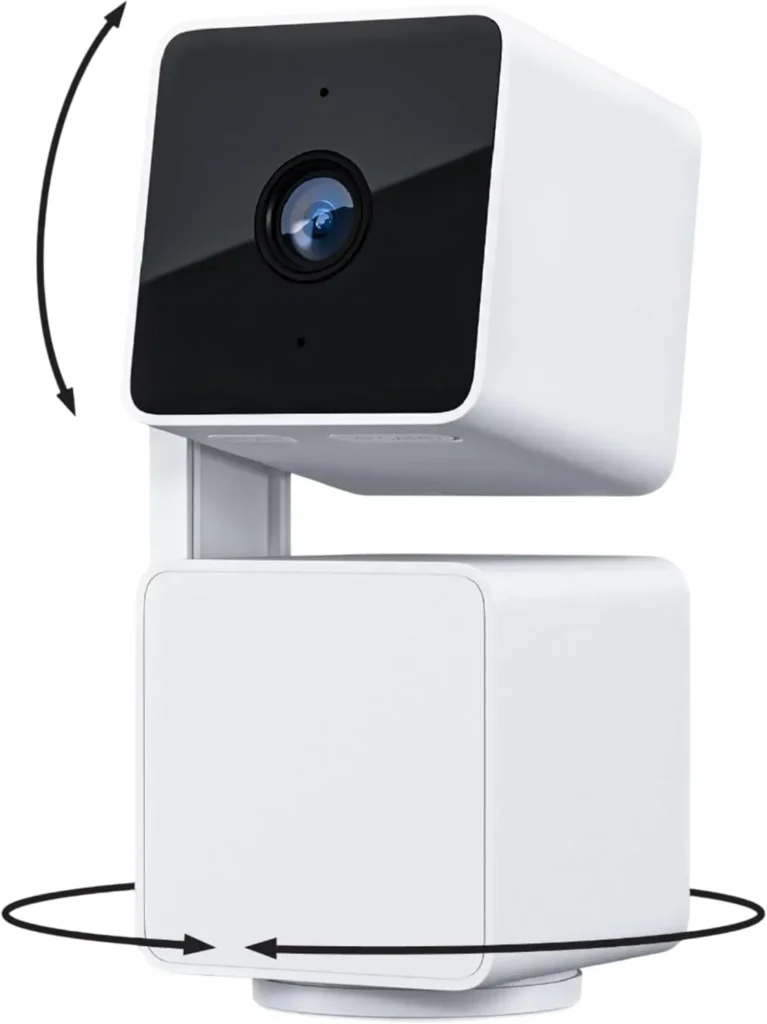
A simple indoor pet camera can reveal whether your dog settles down after a few minutes, spends the day looking for something to do, or shows signs of real separation anxiety.
Seeing those first 20–30 minutes can completely change how you help your pup.
A Simple Way to Know What’s Really Happening
One of the kindest things you can do—for both yourself and your dog—is replace guessing with understanding.
That’s the real answer to separation anxiety vs. boredom for a lot of dogs: some are simply bored, some are truly anxious, and many, like Bella, are a little bit of both.
The Kindest Thing You Can Do Is Watch, Not Assume
The Kindest Thing You Can Do Is Watch, Not Assume
However your story looks today, I hope you leave this page remembering one simple thing:
Your dog isn’t trying to make your life harder.
They’re trying to make sense of a world that feels unpredictable whenever you disappear.
Whether the answer is boredom, separation anxiety, or a little of both, their behavior is never about being “bad.”
It’s communication.
And once you start listening to what they’re really saying, everything begins to change.
Please don’t feel like you have to solve everything this week.
Dogs don’t learn trust overnight.
And neither do we.
Small, gentle changes—repeated with patience—are often the ones that last the longest.
Bella didn’t change in a single day.
Some days she took two steps forward.
Other days she seemed to take one step back.
But little by little, she stopped fearing every goodbye.
And if you’re here, reading this because you want to understand your own dog better…
you’re already giving them one of the greatest gifts they could ever ask for:
Someone willing to understand before judging.
Our dogs don’t expect perfect parents.
They simply hope we’ll keep trying to understand them.
Frequently Asked Questions
Is it separation anxiety vs. boredom, or can a dog have both?
Yes — it’s actually common. A dog can be under-stimulated during the day and also genuinely afraid of being alone. That’s often the case with dogs like Bella. If you want to go deeper on this, we’ve also mapped out the full signs of separation anxiety on their own. The good news is you don’t have to choose one fix; enrichment and desensitization work well together.
How long does it take to fix separation anxiety in dogs?
It varies a lot from dog to dog, but most gradual desensitization plans take several weeks to a few months of consistent, small steps. There’s no shortcut that works long-term — the slow way is the way that sticks.
Does crate training help with separation anxiety?
It depends on the dog. Some dogs feel safer in a crate; others panic more when confined, which is one of the signs covered above (sign #9). If your dog escalates in the crate, forcing it usually makes things worse, not better.
Before You Go…
If today’s article helped you see your dog’s behavior a little differently, these gentle reads are a wonderful next step.
Each one explores another piece of the puzzle, helping you build an even stronger bond with your best friend.

Andrea Frota is the creator of Dog In Focus, a blog dedicated to helping dog owners better understand dog behavior, training, health, and everyday care. Through carefully researched articles and practical guidance, Andrea shares helpful information to support responsible and confident dog ownership.