💛 Just a little heads-up, friend: Some links in this article are affiliate links. If you choose to buy through them, I may earn a small commission at no extra cost to you. Bella and I only recommend products we’d genuinely feel good about giving to our own family.
Have you ever picked up your car keys and felt your heart sink because your dog is already staring at you with that sad look?
Before you even touch the doorknob, they suddenly go quiet. Or maybe they turn into a furry little shadow, glued to your ankles as you reach for your jacket.
You’re not imagining it, and they definitely aren’t reading your mind.
Instead, they are reading what veterinary behaviorists call dog departure cues.
These are the tiny, everyday routines you’ve unknowingly taught them—and for a sensitive pup, they act like a loud alarm bell that you are about to disappear.
💛 Heart-to-Heart
Can I tell you something?
If you’ve ever paused at the front door because your dog was looking at you with those big, hopeful eyes…
please know you’re not overthinking it.
Almost every loving dog parent has experienced this moment.
That tiny pause.
That guilty feeling.
That little voice asking,
“Does my dog already know I’m leaving?”
The answer is yes.
And once you understand how dogs recognize these tiny routines, everything starts making a lot more sense.
🐾 In This Guide
In this article, you’ll discover:
- Why dogs notice your leaving routine so quickly
- The most common departure cues dogs recognize
- Quiet signs of anxiety that many owners overlook
- A simple self-check you can try today
- Gentle ways to help your dog feel safer
- When departure cues may point to separation anxiety
- What to do next if your dog is struggling
Some of these signs may surprise you.
In fact, one of the strongest departure cues isn’t your keys…
it’s something most owners never even notice.
By the end of this guide, you’ll understand why these tiny everyday habits matter so much—and how you can help your dog feel calmer when it’s time to say goodbye.
Why Dogs Learn Your Leaving Routine So Quickly
Here’s something most dog parents don’t realize…
Your dog doesn’t need to see you walk out the front door to know you’re leaving. By the time you’ve picked up your keys, they’ve probably already figured it out.
Dogs don’t think the way we do.
They don’t sit there wondering,
“I think Mom is leaving.”
Instead, they quietly collect patterns.
Little by little.
Day after day.
Until your routine becomes as predictable to them as sunrise.
Long before you consciously decide “okay, time to go,” your body has already been broadcasting it — the keys jingling, the specific shoes, the perfume or cologne, even the way you glance at the clock or set your coffee cup down a little differently than usual.
Your dog didn’t learn this overnight, and they definitely didn’t learn it because they’re anxious or “too clingy.” They learned it the same way they learned that the crinkle of a treat bag means something good. It’s just association — built from hundreds of repetitions of you doing the exact same little routine before you disappear.
The heartbreaking part? For a dog struggling with separation anxiety, this radar isn’t a cute party trick. It’s an early-warning siren. And once that siren goes off, their panic can start minutes before you even touch the doorknob.
🐾 Paw Pause
Dogs don’t watch the clock. They watch you. 💛
Think of it like hearing the opening notes of a song you know by heart. Your dog isn’t reacting to your keys. They’re reacting to everything those keys have come to mean.
🐾 Quick Answer
Can dogs really tell when you’re about to leave?
Yes.
Not because they can predict the future—but because they’ve become incredibly good at recognizing your daily habits.
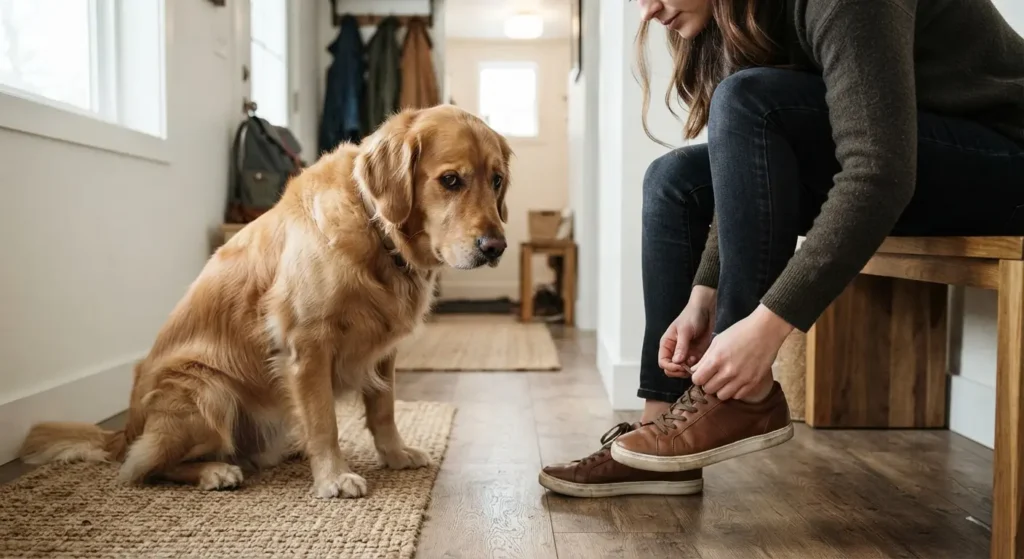
Simple actions like putting on shoes, picking up your keys, grabbing your bag, or even spraying perfume become “departure cues” your dog learns over time.
Depending on your dog’s personality, these cues may trigger excitement, calm anticipation, or separation anxiety before you’ve even opened the front door.
If your dog starts following you everywhere as soon as your leaving routine begins, you may also enjoy reading our guide:
💛 You might also enjoy:
Why Does My Dog Follow Me Everywhere?
It explains why some dogs become little shadows long before you’re actually out the door.
⭐ Bella’s Favorite: The Game-Changer
This simple shift became one of our favorite little rituals.
The moment I reached for my keys, Bella stopped staring anxiously at the front door. Instead, she looked at me expecting something wonderful: a stuffed, frozen enrichment toy that only made an appearance right before I left.
It didn’t erase her anxiety overnight, but it slowly replaced her worry with something delicious she could actually look forward to. Rewiring those dog departure cues takes time, but this was our biggest win.
I highly recommend keeping a few of these pre-stuffed in your freezer.
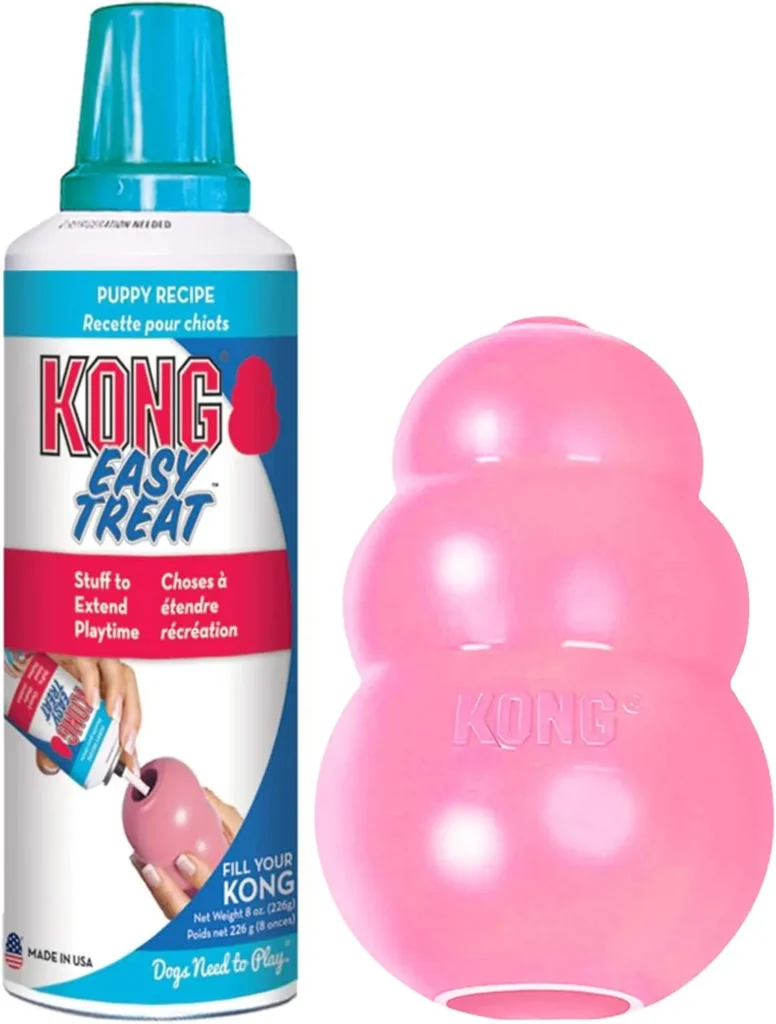
Our absolute lifesaver for busy mornings.
9 Everyday Dog Departure Cues They Rarely Miss
You may not even realize you’re giving these signals.
But after watching your daily routine hundreds of times, your dog has learned that even the smallest habit can mean one thing:
“You’re about to leave.”
Some of the cues on this list are obvious. Others surprise almost every dog parent the first time they notice them.
And for dogs with separation anxiety, these tiny cues can start the stress long before the front door even opens.
🐾 Tiny Moments, Big Feelings
To us, these habits feel ordinary.
To your dog…
they tell a whole story.
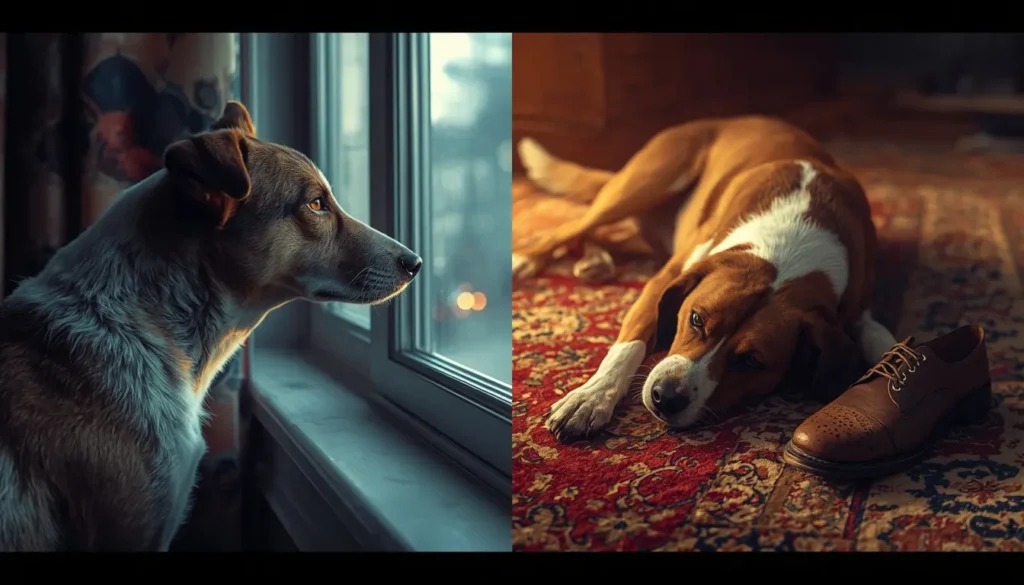
- Putting on your outdoor shoes or sneakers: Most dogs quickly learn the difference between your comfy house slippers and the shoes you wear when you’re heading out. For many pups, this is one of the strongest “goodbye” signals.
- Changing into your “going out” clothes: Some dogs don’t even wait for the shoes. The moment you swap your comfy clothes for jeans, work clothes, or a nice outfit, they already know something is about to happen.
- Hearing your keys jingle: Most dogs don’t react to the keys themselves. They react to what that familiar sound has always meant: you’re about to leave. After hearing it hundreds of times before your departure, even a tiny jingle can make your pup perk up—or quietly walk away.
- Grabbing your everyday bag or purse: It’s the ultimate “I’m leaving the house” signal. If you only touch that specific tote, work backpack, or handbag when you’re headed out the door, your dog has already memorized its exact meaning.
- Turning off the TV or certain lights: It may seem completely ordinary to you, but your dog sees it as another piece of the “you’re leaving” puzzle.
- Putting on your favorite jacket: Some dogs recognize that one jacket before they recognize anything else. If it’s the coat you always wear when leaving the house, it can become one of the earliest signs that a goodbye is coming.
- Brushing your teeth or putting on makeup: Morning routines become powerful clues, especially if you usually leave home around the same time every day.
- Saying “Goodbye”: Even loving words like “Be good!” or “I’ll be back soon!” can become emotional signals that tell your dog it’s almost time for you to leave.
- Hearing a familiar alarm: Dogs are incredibly good at connecting sounds with routines. An alarm that rings every weekday morning can become another clue that you’re getting ready to leave.
None of these habits are bad.
The problem isn’t your shoes.
Or your keys.
Or your jacket.
The problem is that your dog has connected them all into one story…
“Someone I love is about to disappear.”
And once that story is repeated often enough, their brain begins reacting before the goodbye even happens.
Every dog is different, of course.
Some may notice only one or two of these cues, while others seem to recognize every tiny detail.
These are simply the departure cues that veterinary behaviorists and experienced dog parents report seeing most often.
| Departure Cue | Why Dogs Notice It | Stress Level | What You Can Do |
| 👕 Changing clothes | First subtle sign of your routine | Low–Medium | Occasionally change clothes without leaving. |
| 👟 Putting on shoes | One of the strongest predictors | High | Wear your shoes around the house sometimes. |
| 🔑 Picking up keys | Familiar sound linked to departures | High | Pick them up randomly throughout the day. |
| 🧥 Jacket or coat | Consistent visual signal | Medium | Put it on occasionally while staying home. |
| 💄 Makeup or perfume | Part of a repeated routine | Medium | Change the order of your routine sometimes. |
| 👋 Saying goodbye | Emotional confirmation | Medium–High | Keep departures calm and brief. |
| ⏰ Morning alarm | Predictable daily cue | Medium | Vary your routine when possible. |
Not Every Anxious Dog Paces or Whines — Some Just Quietly Disappear
Here’s something I don’t see talked about nearly enough (and it took me a long time to even recognize it in my own dog):
Anxiety doesn’t always look loud.
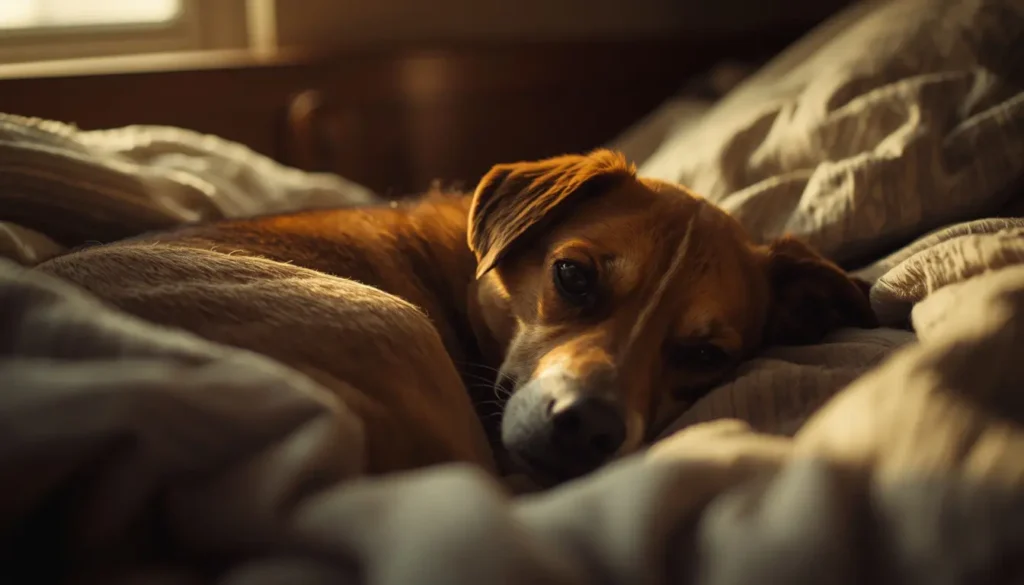
Whenever I start changing out of my house clothes, Bella already knows. She doesn’t bark. She doesn’t follow me around whining.
She just quietly walks off to a cozy little corner of the house, or climbs onto my bed and tucks herself between the pillows—back turned to me, completely still.
No fuss. No protest.
Just this small, private kind of sadness, like she’s already begun grieving the goodbye before it’s even happened.
💛 Heart-to-Heart
For a long time, I actually mistook this for her being “fine”. Because she wasn’t dramatic, I assumed she wasn’t bothered.
It took me a while to realize that turning away and tucking herself into a hidden spot was her version of distress. Some dogs protest loudly. Others withdraw quietly. Neither one is less real than the other.
If your dog goes unusually still or hides when you get ready, please don’t read that as indifference. It’s often their quiet, dignified way of saying: “I already know, and I don’t love it.”
A quick self-check — does your dog show any of these before you even reach the door?
- Suddenly goes quiet or still after being playful moments before
- Walks away to a specific “safe corner,” bed, or hiding spot
- Turns their back to you or avoids eye contact
- Follows you closely, but silently, without whining
- Refuses treats or toys they’d normally love
- Settles into a tight, curled-up position rather than their usual relaxed sprawl
🌿 Gentle Reminder
Every dog expresses worry differently.
Loud or quiet…
they’re both asking for exactly the same thing:
to feel safe.
If several of these sound familiar, your dog may be showing you their anxiety in the quiet register instead of the loud one — and that deserves just as much gentle attention.
Why This Actually Matters (and Isn’t Just a Cute Fact)
Here’s the piece that changed everything for me with Bella: if your dog’s anxiety starts building before you even leave, then everything you do in your final five minutes at home — even with the best intentions — might be making things harder.
That long, emotional goodbye where you crouch down and say “mommy will be back soon, be a good girl, I promise” while cupping their little face? I know it feels like love (and it is), but from your dog’s side, it confirms that something big and scary is about to happen. You’re accidentally validating the alarm bell instead of turning it off. When you accidentally make a big deal out of leaving, you are only confirming their fear of those dog departure cues.
This pattern often gets worse quietly over time — if you’ve noticed your dog’s reaction to your departure cues intensifying lately, it might be worth reading our post on why separation anxiety suddenly gets worse, since routine changes tend to sharpen this radar even further.
It’s also worth saying gently: not every dog reacts to these cues with the same intensity, and that’s not a reflection of how much they love you. Dogs who feel generally more emotionally secure — through consistent routine, confident body language modeling, and a calm household — often notice the same cues without spiraling into distress over them. Veterinary behaviorists note that this kind of pattern recognition is a completely normal canine skill; it’s the emotional response layered on top of it that varies from dog to dog, and that’s the part we can actually help soften.
How to Gently Rewire the Cues
The beautiful thing about association is that it goes both ways — you can teach it, and you can also un-teach it. Gently, and with a lot of patience. The most loving way to help your pup feel safe again is changing how their brain responds to your specific dog departure cues.
- Break the pattern on purpose. Put your shoes on and then sit down and watch TV. Grab your keys and then make a snack. Do your “leaving things” at random times when you’re not actually leaving, so they stop being a reliable predictor of doom.
- Make your exit boring on purpose. No big goodbye speech, no long hug, no guilty voice. A calm, cheerful, almost forgettable exit teaches your dog’s brain: this is not a big deal.
- Give them something to focus on right as the cues start. A stuffed frozen Kong, a snuffle mat, or a calming chew that appears right when you grab your bag can slowly start to replace dread with anticipation of something good.
- Practice the whole sequence without leaving. Shoes, keys, hand on the doorknob, open the door, step out for three seconds, come back in. Repeat often. Boring is the goal.
🐾 Try This Tonight: The 5-Minute Cue Test
Before you even start retraining anything, try this simple experiment: one evening when you’re not actually leaving, put on your shoes and grab your keys, then just… sit back down on the couch. Watch what your dog does in the next 30 seconds.
Do they perk up and follow you to the door? Go still and quiet? Wander off to a corner? Whatever you notice is genuinely useful information — it’s the clearest, gentlest way to see your dog’s specific “leaving language” in action, without any real goodbye attached to it. Jot it down. It’ll help you know exactly which cues to start practicing first.
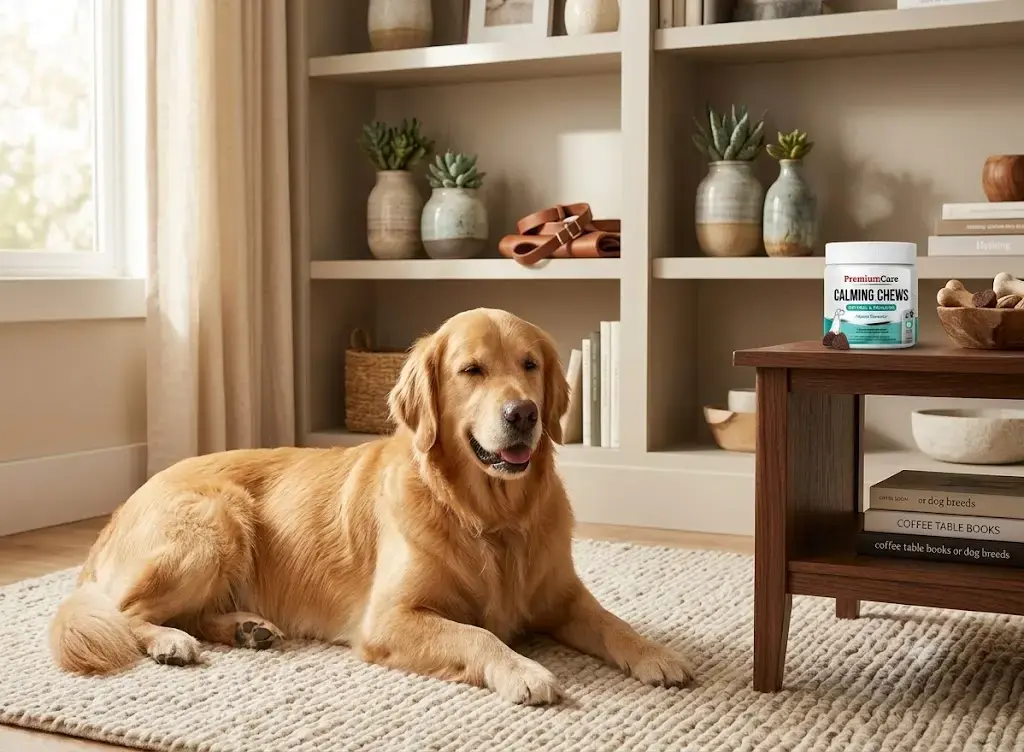
We keep a jar of these calming chews right by the door specifically for this — the second the cue starts (keys, shoes), it becomes ‘treat time’ instead of ‘goodbye time’ in her little brain. They’re specifically formulated for separation anxiety relief, gentle enough for daily use, and made in the USA, which gave me extra peace of mind.
⭐ Bella’s Calm Corner
Along with her enrichment toy, one thing that really helped Bella was having a soft, cozy spot that always stayed the same whenever I left.
Dogs often feel more secure when they have a familiar place to settle down.
👉 See the fluffy calming bed that finally helped Bella feel safe on Amazon.
When the Cues Are Just One Piece of a Bigger Pattern
Sometimes departure cues are the whole story. But sometimes they’re just the most visible symptom of something bigger — especially if you’re not totally sure whether what you’re seeing is anxiety or just plain restlessness. If that sounds deeply familiar, you might be dealing with something more complex. Our gentle guide on Dog Separation Anxiety Signs: 7 Clear Warnings can help you pinpoint exactly what your dog is feeling before you build a plan.
If retraining your dog’s reaction to these cues feels overwhelming to do alone, a structured desensitization program can walk you through the exact order and pace to practice this, so you’re not guessing — just following a proven, gentle plan.
If you’re feeling exhausted and don’t know where to start, this step-by-step plan is the exact roadmap you need to help your dog feel safe again.
You Didn’t Cause This, and You’re Not Stuck With It
If your dog has learned to read you this closely, it’s honestly a little bit beautiful — it means you’re the center of their whole world. That’s not something to feel guilty about. It just means their radar needs a gentle recalibration, and that’s something you absolutely can help with, one calm, boring goodbye at a time. Remember, your pup isn’t trying to make you feel guilty; they have just learned to read your dog departure cues a little too perfectly.
Bella still watches me put my shoes on. But these days, most of the time, she just sighs, circles twice, and goes back to her nap — because somewhere along the way, “shoes” stopped meaning “goodbye forever” and just started meaning “mom will be back.” That’s the whole goal. Not a dog who never notices. A dog who notices… and feels safe anyway.
🐾💛 One Last Thought
Your dog isn’t counting the minutes until you come home.
They’re simply hoping you’ll always come back.
And with a little patience, gentle practice, and lots of love…
you can help them believe that every single time.
More Gentle Reads From Dog in Focus
- Why Is My Dog’s Separation Anxiety Suddenly Getting Worse?
- Dog Separation Anxiety Signs: 7 Clear Warnings + What Helpful Steps You Can Take
- Why Does My Dog Follow Me Everywhere? 7 Real Reasons That Finally Make Sense
- Best Dog Crate for Separation Anxiety: 5 Heavy-Duty Picks to Keep Your Pup Safe
Frequently Asked Questions
Why does my dog get anxious before I even leave the house?
Dogs are brilliant at reading patterns. Because you do the exact same things before leaving (like putting on shoes or grabbing keys), these everyday actions become reliable dog departure cues. Their brain connects the dots, causing their anxiety to start minutes before you actually open the door.
Does saying a long goodbye make my dog’s anxiety worse?
Often, yes. I know it feels wrong to just walk out without a big hug, but emotional, drawn-out goodbyes actually confirm to your dog that something stressful is about to happen. A calm, low-key, and almost boring exit helps them realize that you leaving isn’t a reason to panic.
How do I stop my dog from reacting to my departure routine?
You can’t erase their memory, but you can gently retrain how they feel about the routine. By practicing your cues (like putting on your coat) when you aren’t actually leaving, and pairing those moments with a tasty treat or puzzle toy, you can slowly replace their dread with calm anticipation.
My dog goes quiet and hides when I get ready. Is that separation anxiety?
Yes, very possibly. While some dogs pace and whine, others withdraw, avoid eye contact, or retreat to a cozy hiding spot. This silent withdrawal is just a quieter coping style, and it deserves exactly the same gentle attention and patience.

Andrea Frota is the creator of Dog In Focus, a blog dedicated to helping dog owners better understand dog behavior, training, health, and everyday care. Through carefully researched articles and practical guidance, Andrea shares helpful information to support responsible and confident dog ownership.