This guide contains affiliate links. If you choose to purchase through them, Dog in Focus may earn a small commission at no extra cost to you. This helps us continue creating gentle, research-backed content for dog parents. Thank you for being here. ❤️
Every adventure is supposed to begin with hope. But if your dog hates car rides, you already know that familiar sinking feeling.
It usually happens before you even back out of the driveway. The whining starts. They begin pacing across the back seat, their breathing becomes shallow and fast, and they just can’t seem to settle down. You catch their reflection in the rearview mirror, and suddenly, the excitement of your road trip fades into a heavy knot of concern.
You wonder if they are terrified. You wonder if they are in pain. Most of all, you wonder if you are doing something wrong.
If you have ever felt that quiet guilt while trying to comfort your dog and keep your eyes on the road at the same time, please take a deep breath. You are far from alone, and you haven’t failed them.
The truth is, vehicles are incredibly overwhelming environments. Between the unfamiliar sounds, the constant vibrations, and the shifting balance, it’s completely natural for a sensitive dog to feel unsure.
But here is the beautiful news: feeling safe is something that can be gently built over time. Not through force, and certainly not through punishment, but through patience, understanding, and a few small changes that tell your dog they are protected.
💖Heart to Heart
If you have ever canceled a weekend getaway, cut a trip short, or driven home feeling heartbroken because your dog spent the entire ride shaking, I want you to hear this: you are not a bad dog parent.
Loving our dogs often means carrying worries they can’t put into words. We replay every decision in our minds, wondering if we missed a sign or if we are accidentally making things worse. When you are desperately trying to figure out why your dog is whining in the backseat, the guilt can feel overwhelming.
But the very fact that you are here, reading this late at night and searching for gentle answers instead of just giving up, says everything about you. It says your dog’s emotional comfort matters. And that exact kind of love is where every meaningful change begins.
Quick Answer
If your dog hates car rides, don’t assume they simply “dislike the car.” Many dogs become anxious because they feel physically unstable, experience motion sickness, or associate every trip with something unpleasant, like a vet visit. The good news is that with patience, short positive experiences, and the right travel setup, most dogs can learn to feel much calmer and safer on the road.
In This Guide
By the end of this guide, you’ll know:
- Why some dogs genuinely fear car rides.
- How to tell the difference between anxiety and motion sickness.
- Seven gentle ways to help your dog feel safer.
- Common mistakes that accidentally increase stress.
- When it’s time to ask your veterinarian for help.
Dogs don’t dream about destinations.
They simply want to feel safe wherever you are.
Why Some Dogs Love Car Rides… While Others Dread Them
Have you ever noticed how one dog happily jumps into the car while another freezes the moment the door opens? It is easy to assume that some dogs simply enjoy traveling and others don’t, but the truth is usually much more complicated.
Every car ride is a complex combination of unfamiliar sounds, constant movement, changing smells, vibrations, and shifting balance. For a confident dog, those things might feel exciting. For a more sensitive dog, they can feel incredibly overwhelming. Imagine standing on a moving floor while someone keeps changing your surroundings every few seconds. That is surprisingly close to what many dogs experience inside a moving vehicle.
Understanding this changes the entire conversation. Instead of asking, “Why is my dog acting like this?” we begin asking, “What is my dog feeling right now?” That small shift often leads to much kinder—and much more effective—solutions.
Not Every Nervous Dog Is Afraid
One of the biggest misconceptions about anxious car rides is assuming that every nervous dog is experiencing fear. Sometimes, they simply feel sick.
Motion sickness is especially common in puppies because the structures in their inner ear responsible for balance are still developing. While some dogs naturally outgrow it as they mature, the American Kennel Club notes that others may continue experiencing nausea into adulthood.
Signs of motion sickness may include:
- Excessive drooling and lip licking.
- Yawning repeatedly.
- Vomiting or dry heaving.
- Refusing to get into the car altogether.
Meanwhile, dogs experiencing emotional anxiety may show behaviors such as:
- Trembling and constant panting.
- Whining or barking.
- Trying to climb into the front seat with you.
- Pacing endlessly from one side of the car to the other.
Sometimes, both problems happen together. Many pet parents can’t tell the difference at first, and that is exactly why it’s important to observe rather than assume.
1. Before Changing the Car… Change the Experience
Here is something that surprised me: most dogs don’t actually fear the car itself. They fear what the car predicts.
For some dogs, every drive ends at the veterinary clinic. Others only travel when moving to a boarding kennel or the groomer. Over time, they begin making a very logical connection: Car = something stressful is about to happen. Once that association is formed, anxiety often starts before the engine is even running. Some dogs begin panting the moment you pick up your keys, while others hide when they hear the garage door open. They aren’t overreacting; they are just preparing themselves for what they’ve learned to expect.
The encouraging part is that associations can be rewritten. Start taking your dog on tiny drives that don’t ask anything from them. Drive around the block, stop for five minutes at a quiet park, sit together while watching people pass by, and then go home. No appointments. No pressure. Just a peaceful outing. These small, uneventful trips slowly teach your dog a new story.
🐾 Paw Pause
Dogs rarely live in the past, but they remember how something made them feel. Every gentle ride is an opportunity to replace fear with trust.
2. Give Your Dog a Place That Feels Like Home
Imagine trying to relax while sitting on a slippery chair that moves every time someone turns a corner. You probably wouldn’t feel very calm, and neither does your dog.
One of the most overlooked reasons dogs struggle during car rides is the constant effort required to keep their balance. With every stop, curve, and acceleration, their body has to work to stay upright. Instead of resting, they are bracing themselves.
Creating one secure, familiar place inside the car can completely change that experience. Dogs relax much more easily when they know exactly where they belong, and after several comfortable trips, that special spot often becomes part of their feeling of safety. Home isn’t always a place; sometimes it’s simply wherever your dog feels secure beside you.
3. A Calm Ride Starts Long Before You Pick Up the Keys
A peaceful car ride doesn’t begin when your dog jumps into the back seat. It begins an hour—or sometimes even several hours—before you leave home.
Many of us focus exclusively on what happens inside the car, but our dogs have already been experiencing emotions long before the engine starts. If the morning has been rushed, if everyone in the house feels stressed, or if your dog is full of unspent energy, they are much more likely to carry those heavy emotions into the vehicle.
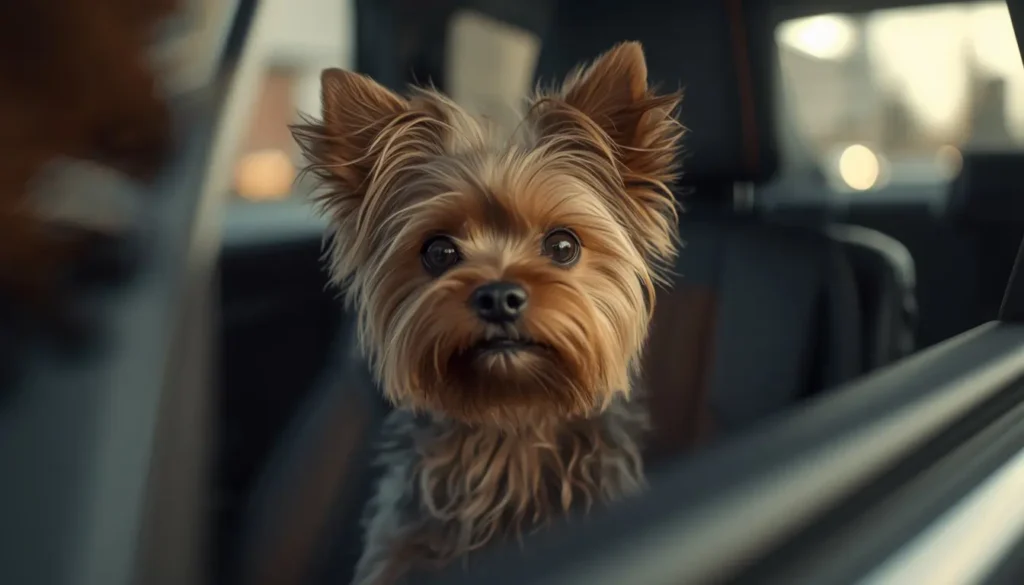
One of the gentlest ways to shift a dog’s focus before a stressful event is through licking. The repetitive motion naturally releases endorphins, helping to soothe an anxious mind before the car door even opens. For my Yorkshire Terrier, Bella, spending just ten minutes with a frozen silicone lick mat on the kitchen floor completely changed her pre-travel mood. It gives her something predictable and comforting to focus on while I quietly gather my keys and bags.

Build a Simple Pre-Trip Ritual
For my own dog, Bella, building a pre-trip routine became a quiet little ritual that changed everything. Before any drive, we started doing the exact same things in the exact same order: a short, unhurried sniff walk, fresh water, and a few quiet minutes with her favorite lick mat. There was no rushing, no high-pitched excitement, and absolutely no pressure.
Over time, Bella stopped freezing at the sound of my car keys. Instead, she simply stood up and started looking for her travel blanket. She no longer expected something frightening; she expected our routine.
Try building a simple bridge between home and the journey ahead:
- A relaxed potty break before leaving.
- Five to ten minutes of gentle sniffing outdoors.
- A lick mat, stuffed toy, or puzzle feeder.
- Calm voices and slow movements (no last-minute rushing).
4. Help Your Dog Create New Memories
Dogs are incredible at recognizing patterns. If every single car ride ends at the vet, your dog isn’t predicting the future—they are remembering the past. Imagine if every elevator ride you took ended with getting a vaccine; eventually, just seeing the elevator doors would make you nervous.
To rewrite these memories, start with an easy three-week plan:
- Week One: No destination. Simply sit together inside the parked car for a few minutes. Offer high-value treats, open the windows, talk softly, and go back inside.
- Week Two: Take a drive around the neighborhood. Five minutes is plenty. Return home before your dog becomes overwhelmed.
- Week Three: Choose a destination your dog genuinely enjoys, like a favorite walking trail or a friend’s quiet backyard.
Nothing extraordinary has to happen. In fact, the quieter the experience, the better. Confidence grows through ordinary moments repeated many times, not through one perfect trip.
5. Safety Feels Better Than Freedom
Many loving dog parents allow their dogs to move freely around the car because it seems kinder. After all, who wants their best friend to feel restricted? But freedom and safety aren’t always the same thing.
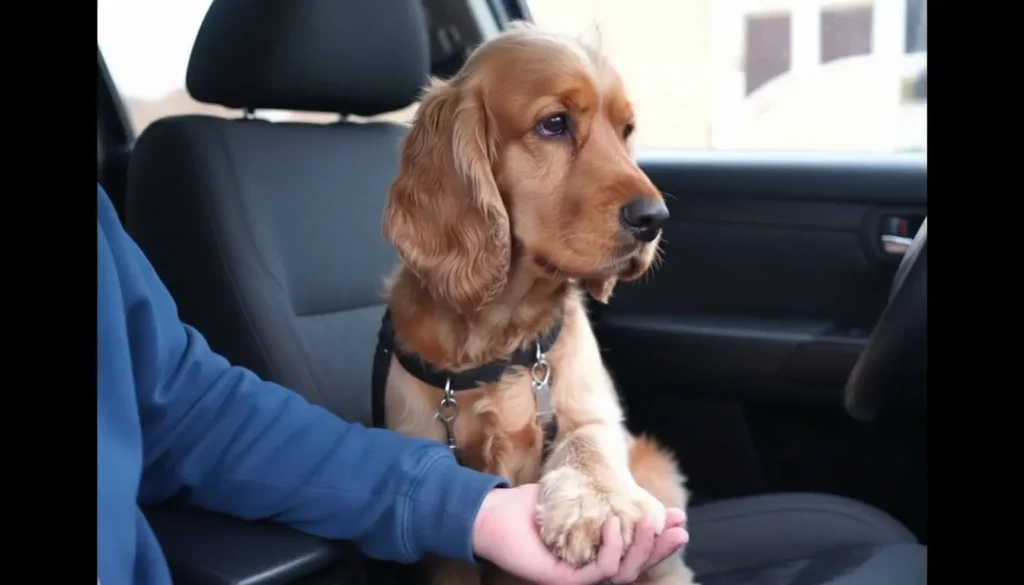
Without realizing it, many dogs spend the entire trip trying to keep themselves balanced. They are standing, sliding, changing positions, and looking for somewhere that feels secure. A properly fitted crash-tested harness or appropriate travel restraint doesn’t just improve physical safety in case of sudden braking—it removes uncertainty.
Your dog no longer has to wonder where to stand or how to keep from slipping every time the car turns. They simply settle into one familiar place, and that feeling of stability often becomes the first step toward genuine relaxation. Bella didn’t become calmer because she had less room to move; she became calmer because she finally stopped feeling like she had to.
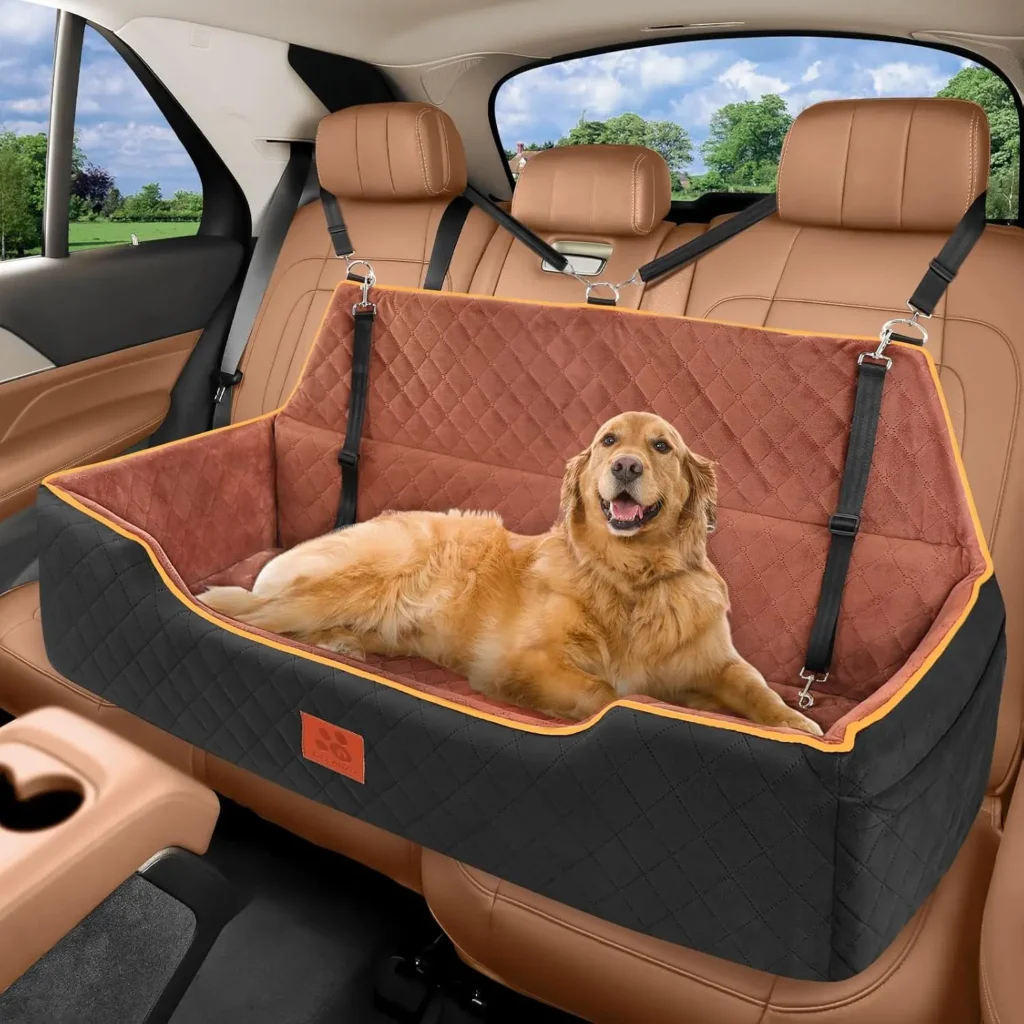
🎒 The Dog in Focus Travel Kit
Over the years, we have discovered that a few thoughtfully chosen products can make road trips feel significantly easier. They don’t magically cure anxiety on their own, but they beautifully support the gentle habits that do.
- For dogs who love the view: A sturdy elevated booster seat or a secure center console seat to help them look out the window, which drastically reduces motion sickness.
- For anxious small breeds: A plush, calming travel bed that mimics the feeling of a warm hug and absorbs the vibrations of the road.
- For medium and large dogs: A supportive back-seat travel bed or a hard-bottom seat extender. This creates a solid, slip-free bridge over the footwell, giving them a completely flat and secure space to rest.
- For dogs who pace or slide: A high-quality, crash-tested travel harness to provide ultimate physical stability and peace of mind.
- For pre-trip calming: A durable silicone lick mat to encourage soothing behavior before the engine even starts.

6. Your Dog Is Also Reading You
There is one part of car anxiety that doesn’t get talked about nearly enough: us.
Dogs are incredibly observant. Long before we notice changes in our own body language, they have already picked up on them. If we are rushing to beat traffic, frustrated because we are running late, or feeling anxious about the drive ahead, there is a very good chance our dogs notice it too. They look to us for reassurance, and our emotional state often influences theirs.
This doesn’t mean you are causing your dog’s anxiety. Far from it. It simply reminds us that calm can be contagious. Before opening the car door, take one slow breath. Speak softly. Move without rushing. Smile when your dog looks at you. Those tiny moments may seem insignificant to us, but to your dog, they translate to: “Everything is okay.”
7. Soften the Atmosphere with Scent and Sound
When we think about car rides, we usually focus on the movement. But for a dog, the sensory experience—the rushing wind, the loud trucks, the unfamiliar smells—can be incredibly intense.
You can gently change the atmosphere inside the vehicle to make it feel more like a sanctuary. Try playing classical music, soft reggae, or a dedicated dog-calming playlist at a low volume to help mask the harsh road noise.
Additionally, many dog parents find comfort in using dog-appeasing pheromones. A simple spray on your dog’s travel blanket mimics the soothing scent of a mother dog. It doesn’t sedate them; it simply sends a quiet, biological message that they are in a secure place. It is a tiny adjustment, but for a sensitive dog, it can make the world feel a little less overwhelming.
When It’s Time to Ask Your Veterinarian
Even with patience, training, and positive experiences, some dogs continue struggling with car rides. And that is perfectly okay. Every dog is different.
If your dog experiences intense panic, repeated vomiting, excessive drooling, or refuses to enter the car altogether, it is absolutely worth scheduling a conversation with your veterinarian. They can help determine if your dog is dealing with severe motion sickness, travel-related anxiety, or even pain that becomes worse during movement.
Getting professional guidance isn’t giving up. It is giving your dog every opportunity to feel better. Whether the solution is a simple behavior adjustment or a veterinarian-approved calming supplement to take the edge off, you don’t have to figure it out alone.
🐾 Paw Pause
Take a moment before your next trip. Look at your dog. Really look. They aren’t wondering how long the drive will be, and they aren’t thinking about traffic. They are simply asking one quiet question: “Am I safe with you?” Everything else comes after that.
Frequently Asked Questions
Can a dog eventually outgrow car sickness? Yes. Motion sickness is very common in puppies because the structures in their inner ears are still developing. Many dogs naturally outgrow this sensitivity by the time they reach one year of age, though some may need continued support.
Should I feed my dog before a car ride? If your dog is prone to nausea, it is usually best to withhold heavy meals for 1 to 2 hours before a car ride. However, traveling on a completely empty stomach can also cause nausea in some dogs. A very small, bland treat beforehand is often a safe middle ground.
Final Thoughts
One day, you might pick up your car keys and notice something beautiful. Instead of walking away or panting nervously, your dog might offer a small tail wag. Maybe they’ll trot toward the front door, or perhaps they’ll simply curl up on their travel blanket before you’ve even backed out of the driveway. When that moment comes, know that it didn’t happen because you found a miracle product, and it certainly didn’t happen because you forced them to “just get over it.”
It will happen because, little by little, you taught them something far more important. You taught them that every journey begins with safety, patience, and trust. Dogs rarely remember the actual destination, but they never, ever forget how someone made them feel along the way. So, please don’t measure your success by how many miles you travel this week. Measure it by the quiet sigh your dog gives when they finally feel relaxed enough to rest their chin on their paws. Those tiny victories are worth celebrating, because to your dog, they mean absolutely everything.
Safe travels, and thank you for letting Dog in Focus be a small part of your journey.
The best road trips aren’t measured in miles. They are measured in peaceful moments shared together.
❤️ Before You Go…
If this article helped you understand your dog a little better, you might also enjoy these gentle reads:
- Why Is My Dog Whining? 7 Real Reasons + How to Comfort Them Fast
- Best Calming Treats for Dogs: 5 Top Picks to Soothe Your Anxious Pup 🐕
- Dog Separation Anxiety Signs: 7 Clear Warnings + What Helpful Steps You Can Take
Because every behavior tells a story. And every story begins with understanding.

Andrea Frota is the creator of Dog In Focus, a blog dedicated to helping dog owners better understand dog behavior, training, health, and everyday care. Through carefully researched articles and practical guidance, Andrea shares helpful information to support responsible and confident dog ownership.