Disclaimer: 🐾 This post may contain affiliate links, which means I may earn a small commission if you make a purchase through them, at no extra cost to you.
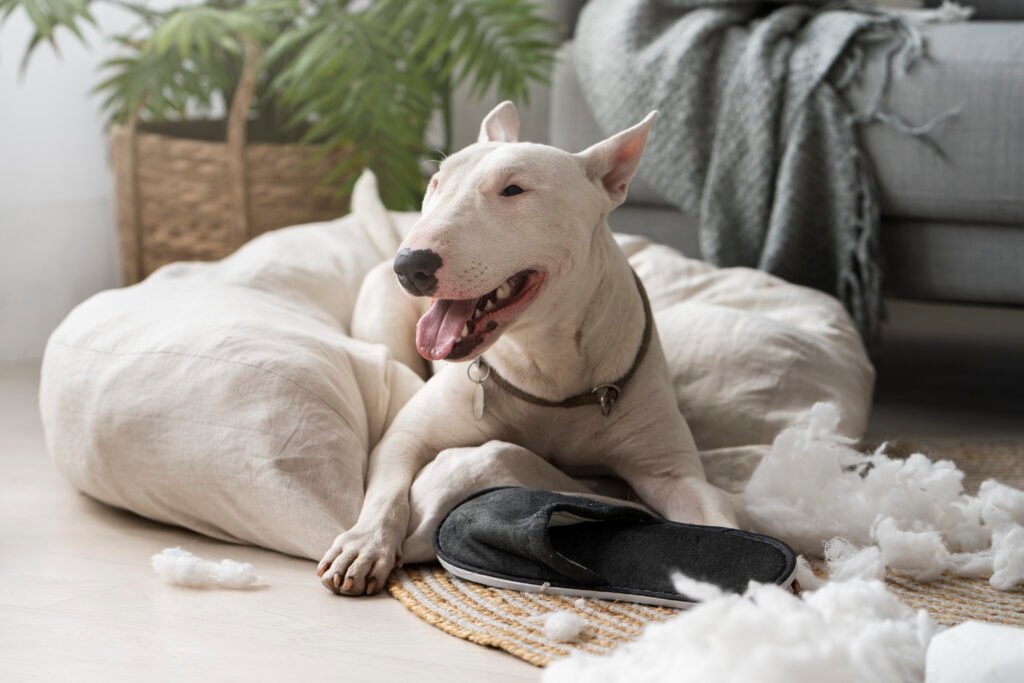
Coming home to chewed shoes, torn cushions, or damaged furniture can be exhausting. If your dog only targets your belongings when you leave the house, you are definitely not alone. 🐶 This behavior is very common among pets, but it is rarely just “bad behavior.” Usually, it is your dog’s way of dealing with alone time, excess energy, or stress.
Understanding the root cause is the first step to protecting your home and helping your furry family member feel calm and secure when you are away. 💛
Why does my dog chew everything when I leave?
If you’re asking yourself why does my dog chew everything when I leave, you’re not alone — and there’s always a reason behind this behavior.
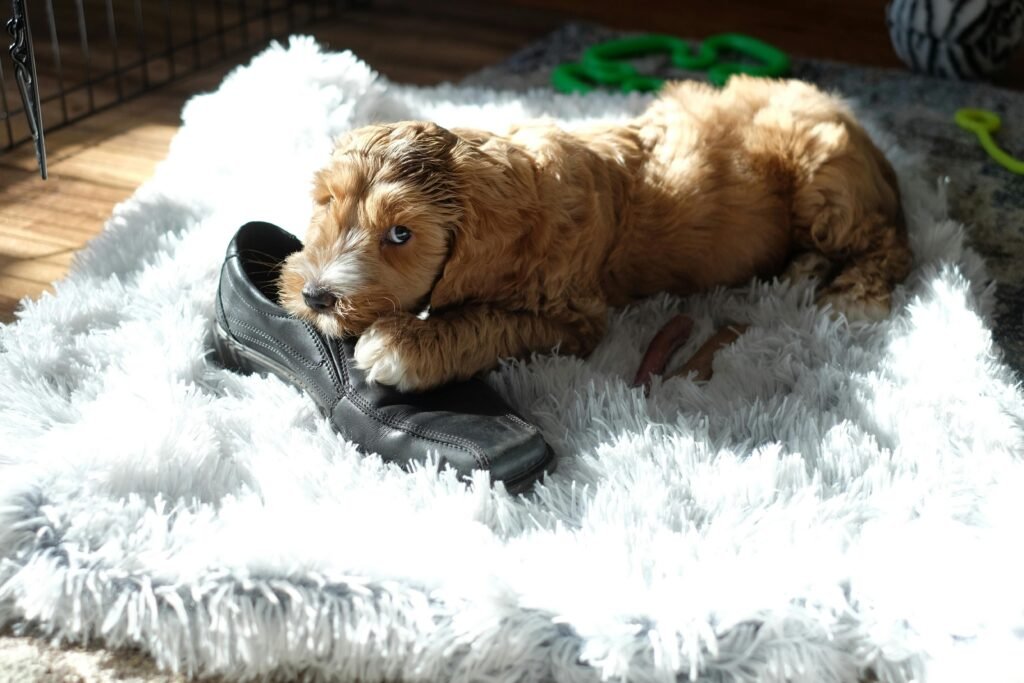
Chewing is a natural dog behavior. It helps dogs explore the world, release tension, and stay busy. The problem begins when your dog chooses your shoes, table legs, pillows, remote controls, or door frames instead of safe chew toys.
When chewing happens mostly after you leave, it usually points to an emotional or routine-related trigger. Your dog may be feeling stressed, restless, overstimulated, under-exercised, or unsure how to settle alone.
To truly understand why does my dog chew everything when I leave, we need to look at the most common triggers behind this behavior.
8 Real Reasons Your Dog Chews Everything When You Leave
1. Your dog is bored and needs something to do
Many dogs chew simply because they are alone with nothing interesting to focus on. If your dog has no mental stimulation, no structured activity, and no safe outlet for chewing, your belongings may become the next best option.
This is especially common in intelligent, curious, and active dogs that get bored easily.
This is one of the most common answers to why does my dog chew everything when I leave.
2. Your dog has too much physical energy
A dog that has not had enough movement before being left alone may look for ways to release that energy indoors. Chewing can become a self-rewarding activity because it gives the dog something active and satisfying to do.
This is common in young dogs, high-energy breeds, and dogs with inconsistent exercise routines.
3. Your dog feels stressed when you leave
Some dogs start chewing because your departure creates tension. This behavior may also be linked to separation anxiety. They may not panic, but they do become unsettled. Chewing can work like a coping behavior because it helps relieve stress.
In these cases, the chewing often starts shortly after the owner leaves.
This is one of the main reasons why does my dog chew everything when I leave becomes such a common concern among dog owners.
4. Nutritional Gaps
Sometimes, the drive to chew stems from a subtle lack of specific nutrients or fiber in their daily diet. When dogs feel an internal dietary imbalance or mild digestive discomfort, they may instinctively gnaw on wood, fabric, or household items to satisfy that craving. Ensuring balanced meals and consulting your vet about dietary needs can quickly rule this out.
5. Your dog may be going through teething
If your dog is still a puppy, teething may be a major factor. Chewing helps relieve gum discomfort and gives puppies sensory relief while their adult teeth come in.
Teething dogs often chew whatever is available, especially when unsupervised.
If you’re wondering why does my dog chew everything when I leave, teething and discomfort may also be part of the problem.
6. Your dog has learned that household items are more rewarding than toys
Sometimes the issue is not that the dog refuses to chew. The issue is that your dog prefers your stuff. Shoes smell like you. Furniture has texture. Bags, socks, and cushions are easy to grab and shred.
If safe chew toys are less interesting, household objects can quickly become the favorite choice.
7. Your dog was left alone for longer than they can handle
Even well-behaved dogs can struggle if the alone time is too long for their age, energy level, or emotional maturity. A dog that starts off calm may become restless later and begin chewing out of frustration or discomfort.
This is very common when routines suddenly change.
If you’re still wondering why does my dog chew everything when I leave, the answer often comes down to unmet needs and emotional triggers.
8. Your dog may be showing early signs of separation-related behavior
Not every destructive dog has full separation anxiety, but chewing everything when left alone can sometimes be part of a bigger pattern. If the chewing happens together with pacing, whining, drooling, barking, scratching doors, or panic-like behavior, your dog may be struggling more seriously with being alone.
That does not mean your dog is “stubborn.” It usually means your dog needs support, not punishment.
This is another common answer to why does my dog chew everything when I leave, especially in emotionally sensitive dogs.
How to stop your dog from chewing everything when you leave
1. Exercise your dog before you go out
A short walk is good, but many dogs do better when they have a real chance to move, sniff, and release energy before being left alone. A calmer body often leads to a calmer brain.
2. Give your dog a safe chew before you leave
Offer something appropriate and long-lasting, such as a safe chew toy, enrichment toy, or food puzzle. This gives your dog a better option and helps create a positive routine around your departure.
One thing that made an immediate difference for us was offering a durable, stuffable toy right as I walk out the door. The KONG Classic Frozen Kit is a lifesaver here — stuffing it and keeping it frozen keeps dogs happily focused, soothes departure stress, and completely redirects their urge to chew your furniture.
👉 Read Next: Check out our ultimate guide on the best long lasting chew toys for teething puppies to discover the safest, most durable options that will keep your dog busy for hours!
3. Put tempting items out of reach
Management matters. Pick up shoes, bags, blankets, chargers, children’s toys, and anything else your dog loves to destroy. Prevention is part of training.
4. Create a calmer leaving routine
If departures are dramatic, emotional, or rushed, some dogs become more tense. Try keeping your leaving routine calm, predictable, and low-pressure.
5. Build up alone time gradually
Some dogs need practice being alone in small steps. Start with short absences and slowly increase the time so your dog learns that being alone is safe and temporary.
6. Make chew toys more valuable
Rotate toys, use food-stuffed options, and save special chews for alone time only. This helps your dog associate your absence with something rewarding.
Some enrichment toys are specifically designed to keep dogs mentally engaged for longer periods, which can be especially helpful when you’re not home.
7. Avoid punishment after the fact
If you come home and punish your dog for something that happened earlier, your dog will not connect the punishment to the chewing. It can increase stress and make the problem worse.
When chewing may be a sign of separation anxiety
Chewing can be caused by boredom or excess energy, but sometimes it is part of a deeper emotional issue. Separation anxiety is more likely if your dog also shows signs like intense distress when you prepare to leave, nonstop barking, escape attempts, drooling, pacing, or accidents in the house only when left alone.
When to talk to your vet or a dog behavior professional
It is a good idea to ask for professional help if:
- your dog destroys doors, walls, or crates
- your dog seems panicked, not just naughty
- the chewing is sudden or much worse than before
- your dog may swallow dangerous objects
- you suspect anxiety, pain, or another health issue
A vet can rule out physical problems, and a qualified behavior professional can help you build a safer plan.
Understanding why does my dog chew everything when I leave is the first step to helping your dog feel calmer, safer, and more secure when you’re away.
Final thoughts
If your dog chews everything when you leave, the behavior usually has a reason behind it. In many cases, the answer is not punishment — it is better routines, better outlets, and better support.
Once you understand whether your dog is dealing with boredom, stress, teething, excess energy, or separation-related discomfort, it becomes much easier to choose the right solution and protect both your home and your dog’s wellbeing.
According to the American Kennel Club, separation-related behaviors can include chewing, barking, and pacing.
In the end, most of these behaviors come down to simple things: routine, energy, and emotional balance.
Once you understand what’s really behind your dog’s behavior, it becomes much easier to guide them in the right direction.
If your dog struggles with chewing when alone, having the right tools can make a big difference — especially toys and enrichment options designed for this exact situation.
Ultimately, knowing why does my dog chew everything when i leave allows you to move from frustration to effective solutions. By choosing the right durable toys and maintaining a consistent routine, you can protect your home and ensure your pet feels secure even when you’re away. What about you? Have you found a specific toy that stopped your dog’s destructive chewing? Share your experience in the comments below!
FAQ
Is my dog chewing things out of spite?
No, dogs do not chew out of spite, anger, or revenge. While it can feel personal when they destroy your favorite pair of shoes, dogs simply do not experience complex emotions like spite. Chewing is purely an instinctual coping mechanism for boredom, excess pent-up energy, or departure anxiety.
Should I crate my dog to stop destructive chewing?
A crate can help some dogs if introduced properly and used positively. But if a dog is highly anxious, crating alone may not solve the problem.
If you want to transform their crate training experience into a stylish home upgrade, don’t miss our review of the gorgeous dog crate furniture pieces that protect your pup while beautifully matching your decor!
What are the best things to give a dog to chew when alone?
Durable rubber toys stuffed with frozen treats (like the classic KONG), tough nylon wishbones, and interactive food puzzles are the safest choices. They give your dog a satisfying, long-lasting sensory workout while keeping them completely away from household furniture. For puppies specifically, check out our guide on teething chew toys for softer, gum-safe options.
How long does it take to stop destructive chewing when left alone?
With consistent physical exercise before leaving, daily mental enrichment, and redirecting them to durable chew toys, most pet parents notice a significant improvement within 2 to 3 weeks. If the chewing is driven by severe separation anxiety, working gradually on short departures may take a few additional weeks of patient training.

Andrea Frota is the creator of Dog In Focus, a blog dedicated to helping dog owners better understand dog behavior, training, health, and everyday care. Through carefully researched articles and practical guidance, Andrea shares helpful information to support responsible and confident dog ownership.