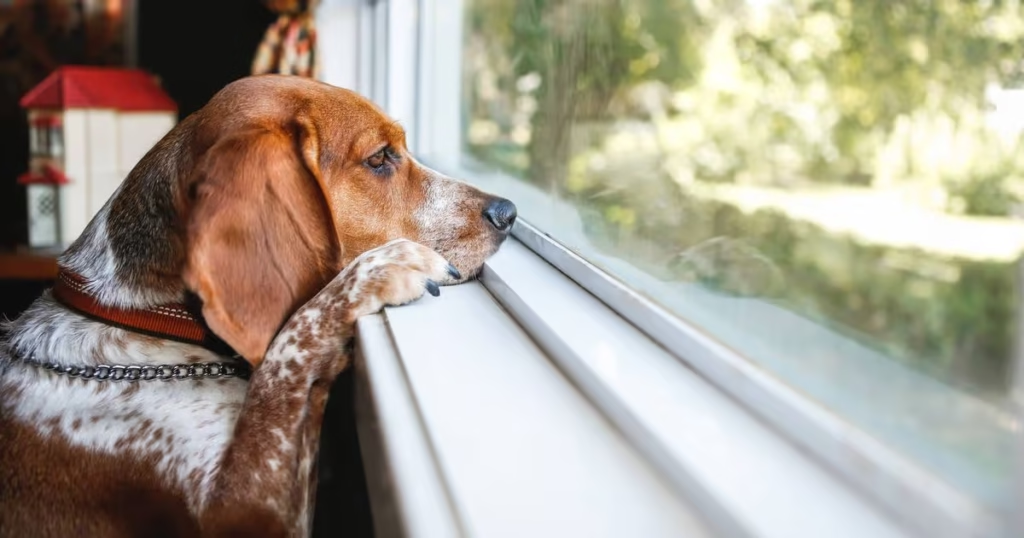
If your dog becomes anxious, destructive, or restless when you leave, you might be dealing with dog separation anxiety.
I’ve been there—coming home to chewed shoes and a racing heart. Dog separation anxiety is not just ‘bad behavior’; it’s a real emotional condition that needs the right approach. Understanding
your dog’s emotional triggers is essential for long-term success.
Recognizing the signs early can make a huge difference in your dog’s well-being and help you prevent more serious problems over time.
Common Signs of Separation Anxiety
- Excessive barking or whining
- Destructive behavior (chewing, scratching doors)
- Pacing or restlessness
- Trying to escape
- Accidents inside the house
If your dog is chewing things when you’re away, this behavior may be linked to anxiety. It is essential to discover why dogs chew everything when left alone to rule out boredom and ensure you are providing the right support.
If you are looking for a natural way to help calm your dog, the Snuggle Puppy Heartbeat Toy — available on Amazon — has helped thousands of anxious dogs feel safer when left alone. It uses a simulated heartbeat to reduce stress and is one of the most recommended tools by dog trainers.
How to Know If It Is Separation Anxiety or Just Boredom
Not every dog that chews or barks when alone has dog separation anxiety. Sometimes, the problem is simply boredom.
The main difference is this: a bored dog usually calms down after finding something to do. A dog with separation anxiety stays distressed no matter what is around them.
Signs that point more to boredom:
- The dog is calm when you are home but destructive when alone
- The behavior stops when you leave toys or food puzzles
- The dog does not follow you constantly around the house
Signs that point more to dog separation anxiety:
- The dog gets anxious before you even leave
- The behavior starts within the first few minutes of you leaving
- The dog seems relieved and overly excited when you return
If your dog also follows you from room to room, this is often a strong sign of dog separation anxiety. You can learn more in our guide on why dogs follow their owners everywhere.
What Causes Separation Anxiety?
Some dogs develop separation anxiety after a sudden change in routine, such as a new schedule, moving to a different home, or the loss of a family member.
Others may struggle because they were never properly trained to be alone or became overly dependent on their owner.
Rescue dogs, in particular, may have a higher risk due to past experiences or abandonment. Understanding these triggers is the first step in managing dog separation anxiety effectively.
If you notice your dog whining frequently, this could also be a
sign — learn more about why dogs whine and how to comfort them.
How to Help a Dog With Separation Anxiety
Helping a dog with separation anxiety takes patience and consistency.
Start by creating a calm and predictable routine before leaving the house. Avoid making departures too emotional, and gradually teach your dog that being alone is safe.
Consistency is key when dealing with dog separation anxiety, as it helps your pet build confidence.
Providing mental stimulation, such as toys or puzzles, can also help reduce stress and keep your dog occupied while you’re away.
In more severe cases, you may need to seek help from a professional trainer or veterinarian.
With the right approach, most dogs can learn to feel more secure and relaxed when left alone.
Many dog owners don’t realize that separation anxiety can develop gradually over time. What may start as mild discomfort can become more intense if not addressed early.
If your dog struggles significantly, seeking help from a professional trainer can provide structured guidance and faster results.
According to the American Kennel Club, separation anxiety is a common issue among dogs and can be managed with proper training.
Every dog is different, and what works for one may not work for another. Paying attention to your dog’s behavior and adjusting your approach is essential.
Over time, with patience and consistency, most dogs can learn to stay calm and feel safe even when left alone. The key is to move at your dog’s pace and avoid forcing situations that increase anxiety.
A long-lasting interactive toy can be a game-changer. I personally recommend the AWOOF Snuffle Mat to keep their minds busy while you’re away. Mental stimulation is one of the most underrated tools for managing dog separation anxiety at home.
Simple Things That Can Make Separation Anxiety Worse
Sometimes, without realizing it, we make separation anxiety worse.
Things like making a big emotional goodbye, giving too much attention right before leaving, or suddenly changing your routine can increase your dog’s stress.
Dogs are incredibly sensitive to patterns. When departures feel unpredictable or intense, it can make them anxious even before you leave.
One thing that helped me personally was keeping my exits calm and low-key. No long goodbyes, no dramatic energy — just a simple, quiet routine.
Over time, my dog started to relax because leaving no longer felt like a big emotional event.
If your dog struggles with being alone, small changes like this can make a bigger difference than you might expect.
Real-Life Example: What It Looked Like With My Dog
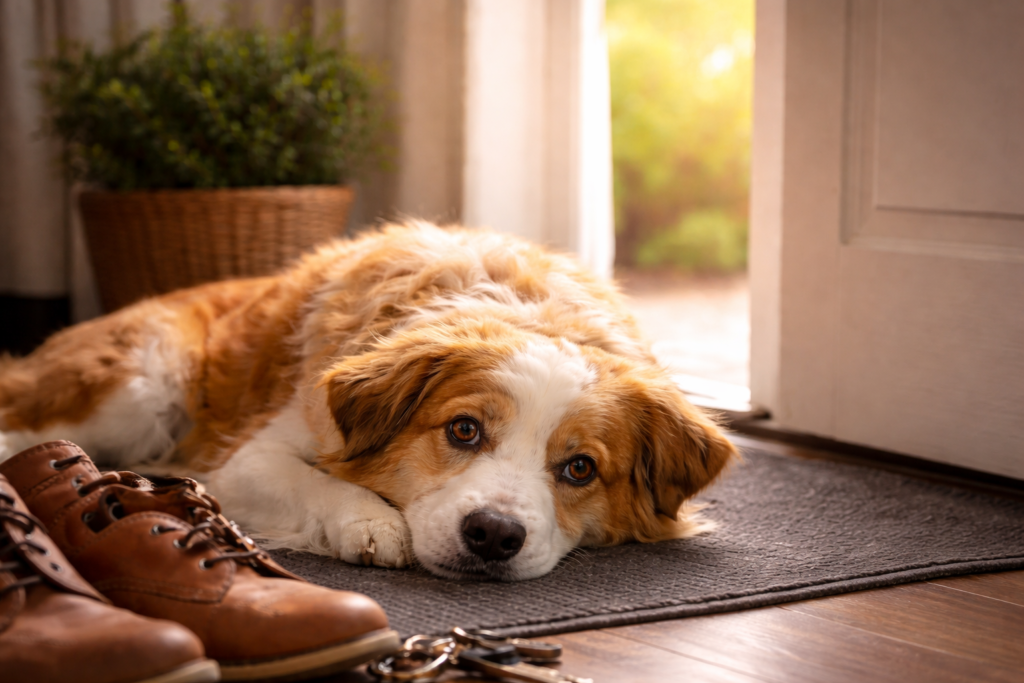
I remember the first time I realized something wasn’t right. I came home and found chewed shoes, scratched doors, and a very anxious dog waiting for me.
At first, I thought it was just bad behavior. But over time, I noticed the pattern — it only happened when I left.
Once I started giving my dog a long-lasting chew toy before leaving, things slowly improved. It gave him something to focus on and helped him feel less alone.
It didn’t fix everything overnight, but it made a big difference. Small adjustments in your routine can significantly reduce dog separation anxiety symptoms over time.
If your dog is also a heavy chewer, check out our guide on why dogs chew everything when left alone.
When to See a Veterinarian About Dog Separation Anxiety
In some cases, dog separation anxiety is severe enough to require professional help beyond training.
If your dog is hurting itself trying to escape, refusing to eat when alone, or showing signs of extreme panic, it is time to speak with a veterinarian.
A vet can rule out any medical causes and, in some cases, recommend short-term medication to help your dog feel calmer while you work on behavioral training.
This is not a sign of failure. Many dogs with severe dog separation anxiety improve much faster when they receive both medical support and consistent training at the same time.
Never try to punish your dog for anxious behavior. Punishment increases fear and makes dog separation anxiety significantly worse over time.
Quick Action Plan: Your First 7 Days
If you are just starting to address dog separation anxiety, here is a simple plan for your first week:
Day 1 and 2: Practice leaving for only 5 minutes. Return calmly, without excitement.
Day 3 and 4: Increase to 15 minutes. Give your dog a long-lasting chew or snuffle mat before leaving.
Day 5: Try 30 minutes. Observe your dog’s behavior when you return — is your dog calm or still anxious?
Day 6 and 7: Gradually increase to 1 hour. Keep departures and arrivals low-key every single time.
The goal is to teach your dog that you always come back. With repetition, dog separation anxiety
symptoms will slowly decrease as your dog builds confidence and trust.
If your dog also barks at night, this could be connected to anxiety. Read our guide on why dogs
bark at night and how to stop it.
Best Products to Help Dogs With Separation Anxiety
Finding the right tools can make a huge difference when managing dog separation anxiety. Here are two products that have genuinely helped thousands of dogs feel calmer and safer when left alone. The Snuggle Puppy Heartbeat Toy mimics the heartbeat of a mother dog, helping anxious dogs feel safe and calm. It is especially helpful for puppies and rescue dogs with dog separation anxiety. The AWOOF Snuffle Mat keeps your dog mentally stimulated while you are away, reducing stress and destructive behavior caused by dog separation anxiety.
Final Thoughts
Separation anxiety is common, but dog separation anxiety can be managed with patience and the right approach.
Helping your dog feel safe when you’re away is one of the most important steps toward a balanced and happy life. Dogs that follow their owners everywhere often show early signs of
dog separation anxiety — if this sounds familiar, read our guide on why dogs follow you everywhere.
Understanding dog separation anxiety is the first step to helping your dog feel safe, calm, and secure when you’re not at home.

Andrea Frota is the creator of Dog In Focus, a blog dedicated to helping dog owners better understand dog behavior, training, health, and everyday care. Through carefully researched articles and practical guidance, Andrea shares helpful information to support responsible and confident dog ownership.