

Disclosure: Dog in Focus is reader-supported. When you buy through links on our site, we may earn an affiliate commission at no extra cost to you. We only recommend products we truly believe in.
If you’ve ever spent an evening sitting on the floor, watching your dog pace, pant, or tremble while you felt completely helpless—take a deep breath. You are not alone, and you are not failing them.
You already know that dealing with different types of dog anxiety isn’t just one thing. It’s several different struggles hiding behind the same worried eyes.
I could have written the standard article that just lists twelve clinical symptoms and calls it a day. But that’s not what I needed when my Yorkshire Terrier, Bella, started struggling. When you’re worried about your dog, you don’t need a medical dictionary. You need a map.
So, this is that map. We are going to look at the different types of dog anxiety, what each one actually feels like from your dog’s side of the room, and how to figure out exactly what your dog is trying to tell you.
Because dogs don’t watch the clock. They watch you. And right now, yours needs you to understand what’s happening inside their head.
Table of Contents
Why Chewed Shoes Can Mean Three Completely Different Things
Here’s the frustrating truth that almost nobody explains clearly: separation anxiety, plain old boredom, and noise phobia can all produce the exact same behaviors.
Chewed furniture. Pacing. Barking at nothing. A dog who simply won’t settle down. From the outside, the mess looks identical.
But here is the secret to helping your dog: The behavior may look the same. The emotion behind it changes everything.
The behavior tells you what happened. The emotion behind it tells you how to fix it. Instead of asking “Why did my dog destroy the pillow?”, try asking “What was my dog feeling when they needed to destroy that pillow?” Once you shift that perspective, the path forward gets a lot clearer.
So instead of starting with “what did my dog do,” we are going to start with “what is my dog actually feeling.”
Boredom: The Look-Alike That Isn’t Anxiety at All
This is the mix-up that sends people down the wrong path for months. A bored dog can chew, bark, and make just as much of a mess as an anxious one. But underneath, they’re not afraid of anything. They just have energy and curiosity with nowhere to go.
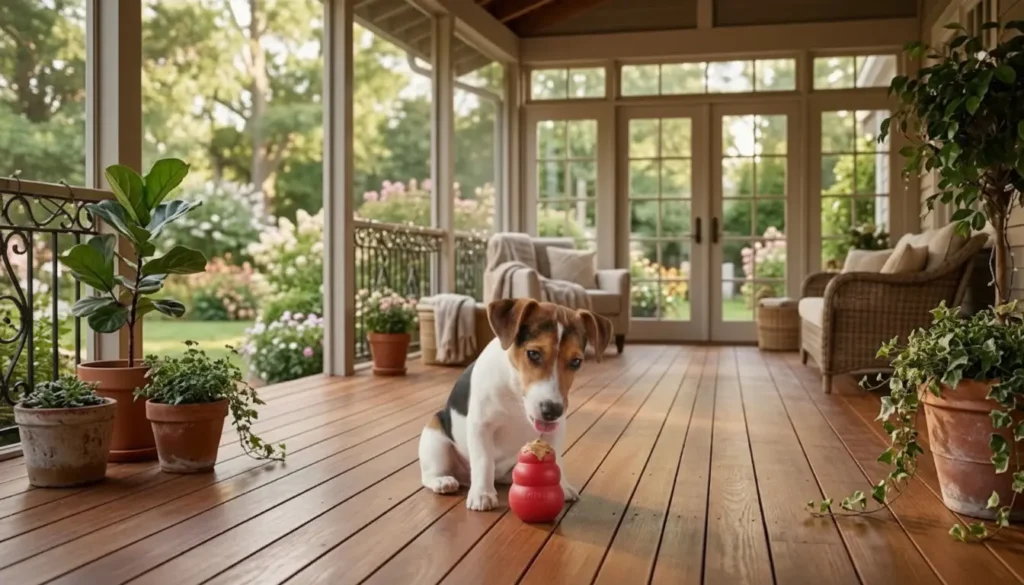
The good news? Boredom is usually the easier fix. You don’t always need complex training—sometimes you just need to redirect their brain. Instead of a standard chew, a great trick is offering a complete frozen Kong kit (stuffing it with dog-safe peanut butter and freezing it overnight). The act of licking calms their nervous system, and the frozen challenge burns mental energy.
Add in more sniffing on walks, a rotating puzzle toy or two, and a lot of that “destructive” behavior quietly disappears on its own.
We wrote a full breakdown on how to tell these two apart, because they genuinely do look identical from the outside:
The Ultimate KONG Frozen Kit
If you want to keep your dog mentally stimulated and truly beat boredom, offering a frozen stuffed KONG is a game-changer. I highly recommend getting a complete kit so you always have one ready in the freezer to keep your pup happily occupied.
Noise Anxiety: Fear of Thunder, Fireworks, and Loud Sounds
Different trigger, completely different fix. A dog with noise anxiety isn’t afraid of being alone or under-stimulated. They’re terrified of a specific sound, and that fear can show up whether you’re sitting right next to them or not.
Trembling that outlasts the noise itself, trying to squeeze into impossibly small hiding spots, and reacting to changes in barometric pressure before a storm even arrives are the biggest giveaways.
This specific type of fear has its own season. It tends to spike around summer storms, Halloween, and New Year’s Eve. Because of this, it is deeply worth preparing your home before the noisy nights begin, rather than scrambling for a solution in the middle of a thunderstorm.
If your dog is hiding during a storm, don’t force them out to “face their fears.” If under the bed feels safe to them right now, let under the bed be their sanctuary. We build confidence through safety, not force.

Gentle Tools to Support Your Anxious Dog
Second, natural calming support can help lower their baseline stress just enough so they can actually absorb the training you’re doing with them. (You can read our full comparison here: Best Calming Treats for Dogs: 5 Top Picks).
A Little Help for the Hard Days
If you’ve been watching your dog shake or pace and just wished you could offer them a cup of chamomile tea, natural supplements are the next best thing.
One option that consistently provides gentle, noticeable relief for separation-related stress without making your dog groggy is PremiumCare’s Calming Chews. They use natural ingredients like chamomile and valerian root to help soothe that nervous edge, making it easier for them to relax while you work on training.
When You Need a Complete Plan
If you are feeling overwhelmed trying to piece together advice from a dozen different Google searches at 2 AM, I highly recommend stepping back and following one single, structured plan.
Brain Training for Dogs
This is the training program I point dog parents to the most. Created by a certified trainer, it shifts your dog’s focus away from their anxiety and channels it into engaging, confidence-building games.
It has a dedicated module that actually makes sense, allowing you to move step-by-step at a pace that honors your dog’s specific needs, rather than forcing them to adapt to a rigid schedule.
When It’s Time to Call a Vet or Behaviorist
Most types of dog anxiety respond well to time, consistency, and the right approach — but not all of them do, and that’s worth saying plainly. According to the American Animal Hospital Association, separation anxiety and noise phobia are among the most common behavioral disorders veterinarians see in dogs, right alongside issues like aggression — which is exactly why a standardized behavioral conversation with your vet is worth having, not something to save for a crisis.
Where to Start (and How to Forgive Yourself)
If you only take one thing away from this guide, let it be this: watching your dog with curiosity instead of guilt is always the right first move.
You do not have to get the diagnosis perfectly right on the first try. It took me months to truly understand Bella’s quiet anxiety, and I am still learning new things about her every single season.
If you are feeling guilty that you didn’t notice the signs sooner, or that you’ve been confusing boredom with separation anxiety—let that go. The very fact that you are here, researching ways to help your dog feel safer in the world, means you are exactly the parent they need.
Whichever of the different types of dog anxiety you are looking at right now, take a deep breath.
And to them, that means everything.
Recognizing these types of dog anxiety is the very first step to helping your best friend live a calmer, happier life.

Andrea Frota is the creator of Dog In Focus, a blog dedicated to helping dog owners better understand dog behavior, training, health, and everyday care. Through carefully researched articles and practical guidance, Andrea shares helpful information to support responsible and confident dog ownership.