
💛 Just a little heads-up, friend: Some links in this article are affiliate links. If you choose to buy through them, Dog in Focus may earn a small commission at no extra cost to you. We only recommend products we’d genuinely feel good about giving to our own family. Thank you for being here.
The house is quiet. The evening light has faded into soft shadows across the living room rug, and all you can hear is the gentle rhythm of your dog breathing. When you watch them rest, understanding the true dog sleeping positions meaning is a wonderful way to feel even closer to your companion. Sometimes they are curled so tightly they look like a tiny, furry croissant. Other times, they are flat on their back with their paws up in the air, looking completely unbothered by the gravity of the world.
If you’ve ever found yourself smiling at these quirky, endearing postures, you’ve likely wondered: What on earth are they dreaming about, and what does this position mean?
In the quiet language of dogs, sleep is the ultimate vulnerability. Out in the wild, closing one’s eyes is the riskiest moment of the day. When a dog chooses to drift into a deep, defenseless slumber right beside you or right in the middle of your living room, it isn’t just rest—it is a profound vote of confidence. It is a silent whisper that says, “I am safe with you.”
Quick Answer
A dog’s sleeping position reveals a lot about their sense of security, comfort, and trust in their environment. Dogs who sleep flat on their backs with their bellies exposed are showing the ultimate sign of trust and relaxation, as their vital organs are fully unprotected. Conversely, dogs who curl tightly into a “donut” shape are conserving body heat and protecting their vulnerable areas, which is completely normal instinctual behavior, especially in cooler weather or new surroundings.
Decoding the 5 Most Common Dog Sleeping Positions and Their True Meaning
Every dog has their own signature style of sleeping. Exploring the dog sleeping positions meaning helps us realize that shifting through different postures depends on temperature, tiredness, and how secure they feel in their surroundings. Let’s look at what these positions really tell us about their inner world.
1. The Donut (Curled Up in a Ball)
If your dog sleeps tucked tightly into a circle with their nose tucked near their tail, you’re looking at the classic “donut.”
- The Meaning: This is an ancient survival instinct at work. By curling up, your dog is naturally conserving body heat and protecting their vital organs from the elements.
- The Emotional Read: While it’s often tied to warmth, it can also mean a dog is still getting used to a new environment or simply prefers a cozy, enclosed sense of security. Just like us pulling a heavy blanket all the way up to our chins on a chilly night, the donut position is pure, comforting self-soothing.
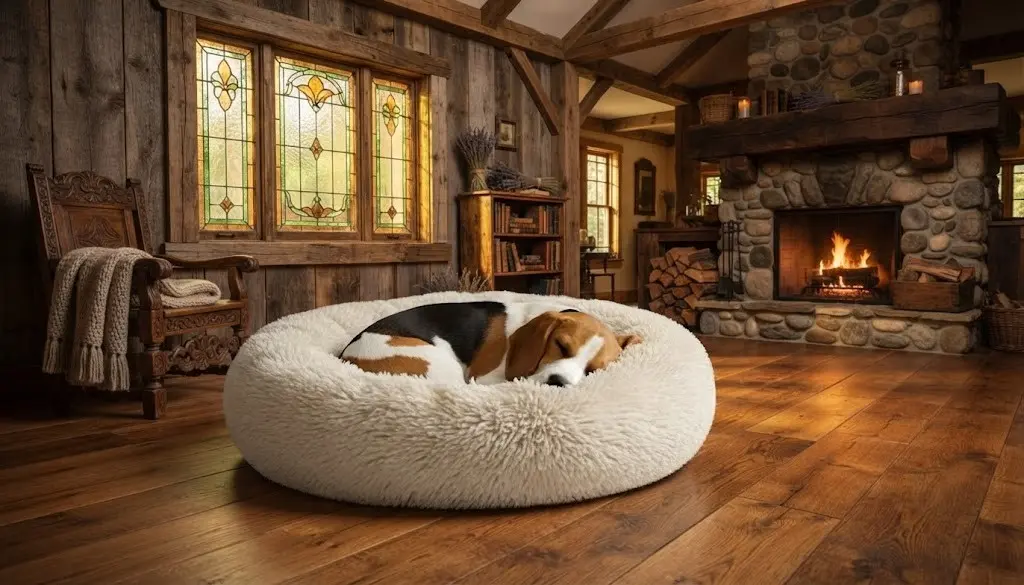
If your dog naturally gravitates toward the cozy donut shape, they will often love a bed with raised, plush borders that mimics that secure, embracing feel. A supportive, calming option like a calming donut dog bed can offer them a true sanctuary of warmth and deep rest after a long day of playing.
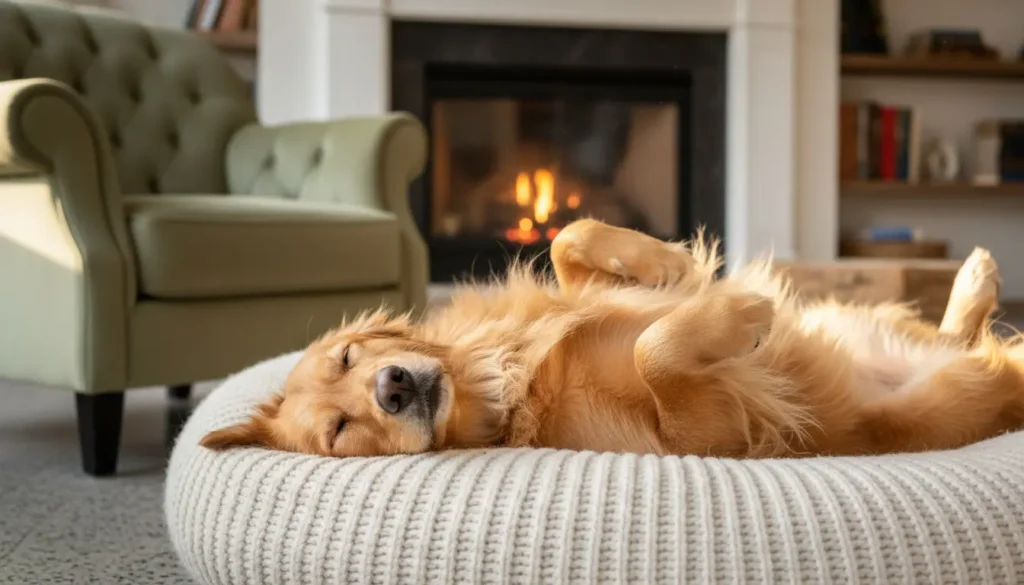
2. The Belly Up (The Ultimate Trust Test)
There is perhaps nothing more comical—or more heartwarming—than walking into a room and finding your dog flat on their back, legs splayed haphazardly in the air, perhaps letting out a soft, contented snore.
- The Meaning: This is the jackpot of canine trust. In the animal kingdom, exposing the belly means exposing the most vulnerable parts of the body—the vital organs and soft tissue—to the open air.
- The Emotional Read: When your dog sleeps this way, they are telling you without a single bark that they feel 100% safe, secure, and completely at peace in their home. It also helps them cool down quickly, as their belly has less fur and plenty of sweat glands. If Bella is sprawled out on her back near your feet, take it as a quiet compliment of the highest order.
3. The Side Sleeper
Stretched out comfortably on their side, legs extended loosely, the side sleeper is usually deep in the realm of restorative REM sleep.
- The Meaning: Dogs who sleep on their sides are generally feeling very relaxed and secure in their surroundings. Because their legs are extended, they aren’t instantly ready to spring up, which means they trust their environment deeply.
- The Emotional Read: This position is a sign of a balanced, happy dog who knows they are in a peaceful home. It’s also the position where you’re most likely to catch them twitching, running, or letting out muffled barks as they chase phantom squirrels in their dreams.
4. The Superman (Sprawled on Their Tummy)
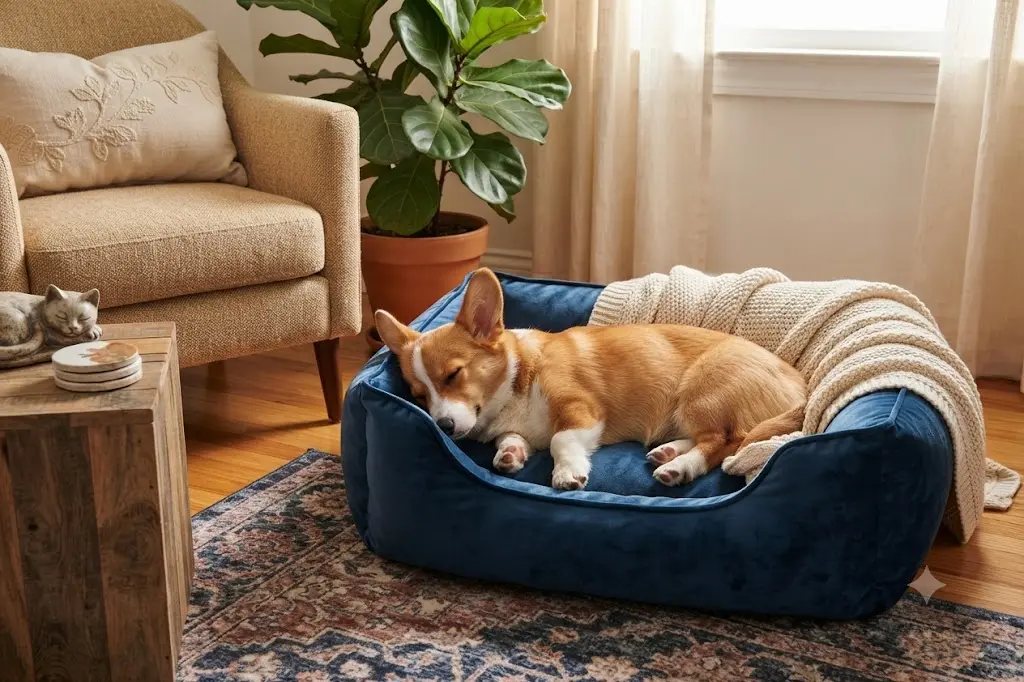
Picture a dog lying flat on their stomach with all four limbs stretched out straight ahead and behind them, looking like they were caught mid-flight.
The Emotional Read: While they are resting, they aren’t fully committing to a deep sleep just yet. They are resting on alert. If a favorite toy squeaks or you crinkle a treat bag across the room, a Superman dog can launch from zero to sixty in a fraction of a second. It’s adorable, energetic, and full of youthful anticipation.
The Meaning: This is the signature posture of the high-energy dog or the playful puppy. Their tummy is pressed against the cool floor, but their muscles are primed.
5. The Snuggler (Sleeping On or Against You)
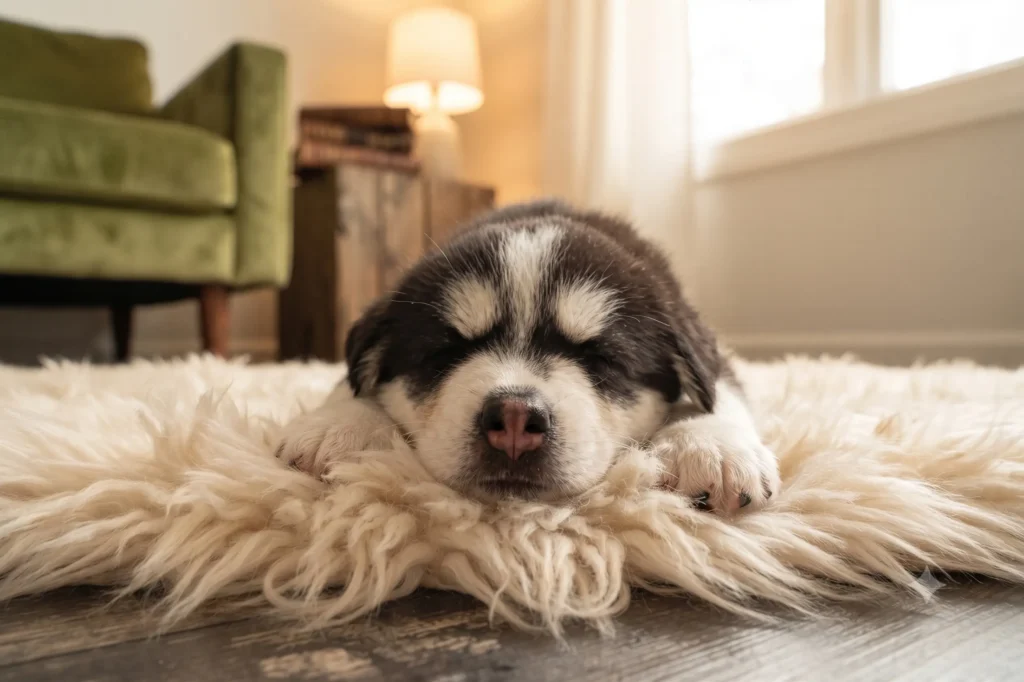
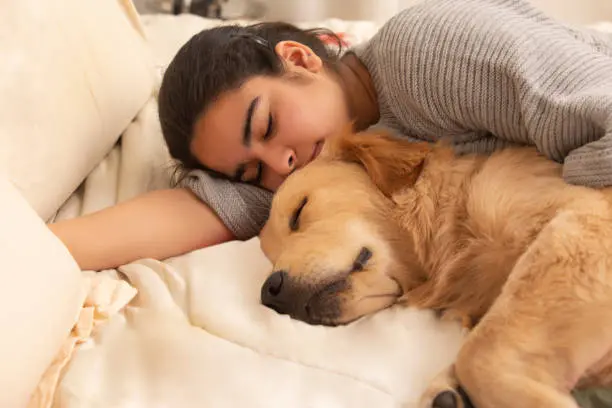
Whether it’s a heavy head resting squarely on your foot, a warm back pressed firmly against your legs, or a dedicated lap-dog taking over the entire couch, the snuggler wants physical contact.
- The Meaning: Beyond just seeking body warmth, this position is rooted deep in pack mentality and profound emotional attachment.
- The Emotional Read: Dogs who sleep pressed against you view you as their ultimate anchor of safety and comfort. It’s an expression of deep affection and loyalty. When a dog anchors themselves to your body while they sleep, they are locking in a physical bond that says you are their favorite place in the world.
Does It Mean My Dog Doesn’t Trust Me If They Sleep Far Away?
It’s completely natural to feel a little pang of rejection if your dog consistently chooses to sleep on the cold hardwood floor in the hallway, or on a dog bed on the opposite side of the room, rather than right beside you on the bed.
Take a deep breath, friend. This has almost nothing to do with how much they love you.
Dogs have a completely different internal thermostat than we do, especially breeds with thick double coats. What feels comfortably warm to us can feel like a sauna to them after just a few hours. Choosing the cool tile of the bathroom floor or a breezy spot near the door is simply their smart way of regulating their body temperature.
Furthermore, independent sleeping habits often indicate a healthy, confident dog. A dog who feels secure in your home doesn’t need to velcro themselves to your side every second of the night to feel safe; they know the house is secure, and they are simply finding the spot where they can get the coolest, quietest rest possible. Your bond is just as strong, even across the room.
Frequently Asked Questions
Do dogs dream when they twitch or bark in their sleep?
Yes, absolutely. Just like humans, dogs experience REM (Rapid Eye Movement) sleep cycles where dreaming occurs. Those little twitches, paw movements, and soft yips usually mean they are running, playing, or chasing things in their dreams.
Should I wake my dog if they look like they are having a nightmare?
It’s best to let them sleep through it. Waking a dog abruptly while they are deep in a dream can startle them, causing a momentary reflex reaction where they might snap out of confusion. If you want to comfort them, use a soft, gentle voice from a safe distance—saying their name calmly—until they wake up naturally.
Before You Go…
If you loved exploring the quiet language of your dog, take a moment to settle in with these gentle reads crafted just for fellow dog parents:
- Why Does My Dog Lean on Me? 5 Heartwarming Reasons Revealed
- Why Does My Dog Follow Me Everywhere? 7 Real Reasons That Finally Make Sense

Andrea Frota is the creator of Dog In Focus, a blog dedicated to helping dog owners better understand dog behavior, training, health, and everyday care. Through carefully researched articles and practical guidance, Andrea shares helpful information to support responsible and confident dog ownership.