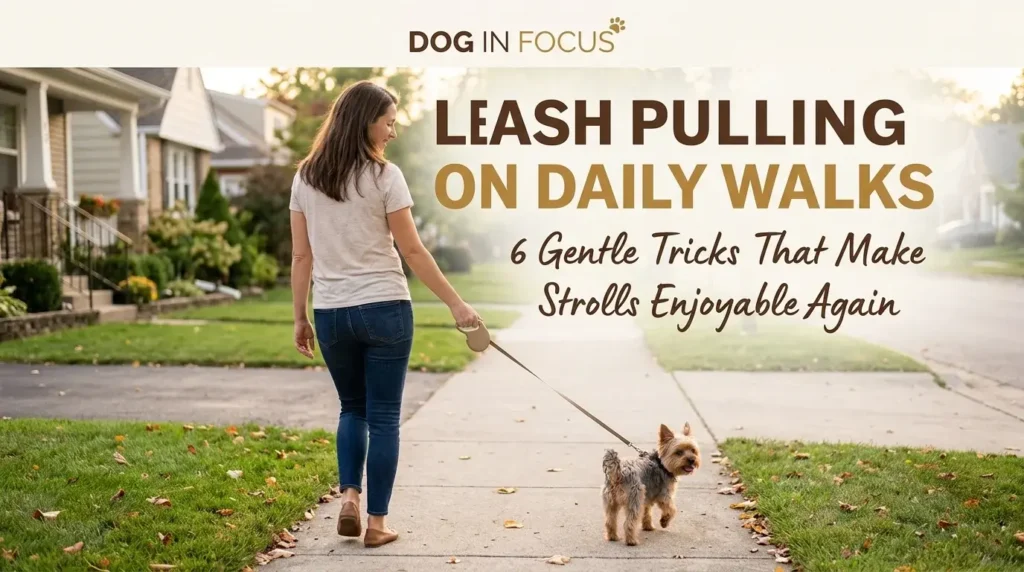
You clip on the leash with the best intentions—fresh air, a little exercise, maybe a calm walk around the neighborhood—and two minutes later, your arm feels like it’s being pulled out of its socket. Sound familiar? 🐾
If your dog lunges toward every interesting blade of grass, mailbox, or passing neighbor, you’re definitely not alone. Leash pulling is one of the most common frustrations for dog parents, and it’s easy to start dreading walks when they feel like a tug-of-war instead of quality time together.
The good news is you don’t need harsh corrections or a strict military routine to turn things around. Most dogs pull simply because the world is exciting, their pace is naturally faster than ours, or they haven’t learned that loose-leash walking gets them where they want to go faster.
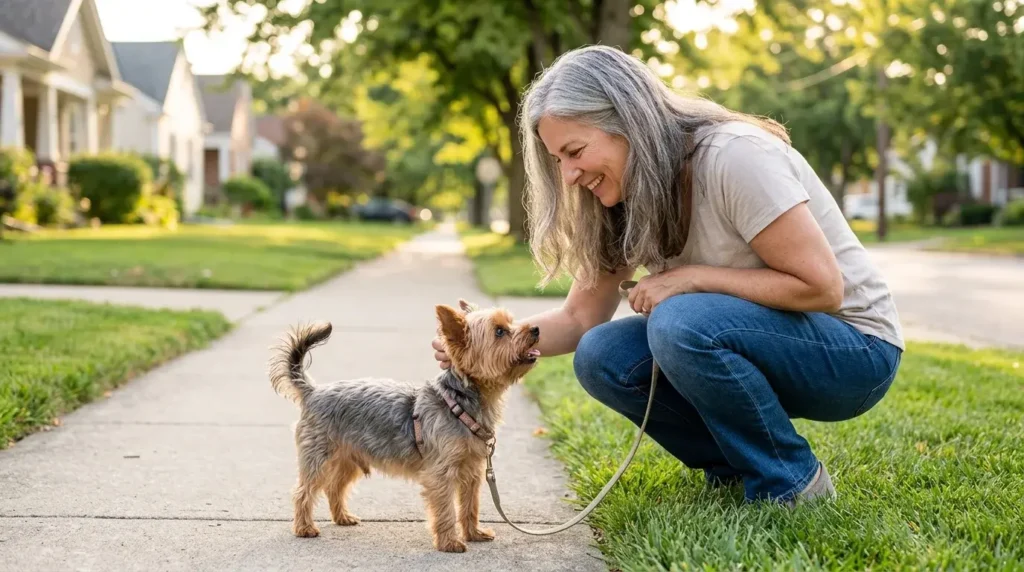
Why Dogs Pull on the Leash in the First Place
Before fixing the habit, it helps to see the walk from your pup’s eyes. To us, a walk is often exercise or a quick errand. To a dog, stepping outside is like opening a giant newspaper filled with stories written in scent.
When a dog sees a squirrel, smells a trail left by another dog, or feels extra pent-up energy, their brain locks onto that goal—and their feet follow right behind. Pulling isn’t disrespect; it’s excitement, curiosity, or sometimes mild overwhelm. Reading your pup’s posture along the way—something we explore more in our Dog Body Language Guide: 7 Secrets to Read Every Pose—can also show you when they’re just eager versus feeling tense.
And honestly, teaching loose-leash manners takes steady patience—something the American Kennel Club talks about too when helping dogs stop pulling on daily walks.
6 Gentle Tricks to Stop Leash Pulling
1. Become a “Tree” When the Leash Tightens
This classic trick is simple, fair, and surprisingly effective. The moment your dog hits the end of the leash and pulls forward, stop walking completely and stand still like a tree. Don’t yank back or scold—just pause and wait.
Dogs quickly figure out a simple rule: pulling stops the forward motion, while slack in the leash keeps things moving. As soon as your pup takes a tiny step back or looks up to check in with you, take a calm step forward again.
2. Reward Check-Ins Before They Pull
We often wait until our dog is already straining at the leash to say something, when their focus is already somewhere else. Instead, catch the good moments early.
Whenever your dog glances back at you, slows down on their own, or walks beside you with a soft, loose leash, give a warm “yes!” or a quiet, happy praise and a small treat. You’re teaching them that staying tuned in to you pays off way better than dragging you down the sidewalk.
3. Change Direction Without Drama
If your dog gets locked onto a distraction ahead and starts charging forward, smoothly turn around and walk a few steps in the opposite direction—no big fuss, just a calm pivot.
Changing direction breaks their tunnel vision and reminds them to pay attention to where you are heading. Many clingy or shadow-like pups—like the ones we talk about in Why Does My Dog Follow Me Everywhere? 7 Real Reasons That Finally Make Sense—already have a strong radar for where you go, so you can build right on that natural connection.
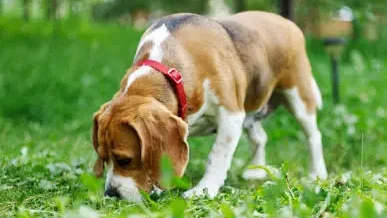
4. Build in Dedicated “Sniff Breaks”
Trying to rush a dog past every single smelling spot on a walk is a recipe for frustration on both sides. Sniffing is how dogs decompress and process the world.
Try giving clear cues so your dog knows when it’s time to explore and when it’s time to move. A simple cue like “Go sniff” for thirty seconds at a grassy patch lets them satisfy that urge without feeling like they have to fight you for every inch of the block.
5. Burn a Little Energy Before Stepping Out
If your dog bolts out the front door like they’ve been waiting all day for a sprint, starting the walk with five minutes of low-key indoor play or mental games can take the edge off.
A quick game of fetch down the hallway, finding hidden treats, or chewing on a favorite toy before putting on the harness helps take the sharpest edge off pent-up excitement. If boredom is part of the mix, checking out Separation Anxiety vs. Boredom: 9 Signs That Reveal What Your Dog Is Really Feeling can help you spot other ways to keep their mind busy.
6. Keep Early Practice Sessions Short and Forgiving
You don’t need a 45-minute training marathon on a busy street to make progress. Start in a quiet yard, driveway, or calm hallway where there are fewer temptations, and keep focused practice to five or ten minutes at a time.
End every session on a win—even a small one—and don’t worry if an exciting passerby derails things on day three. Progress on leash walking usually looks like two steps forward and one wiggly step back, and that’s completely normal.
Bringing the Calm Back to Your Daily Routine
Stopping leash pulling isn’t about turning your dog into a robot who marches rigidly beside you. It’s about building a rhythm where both of you feel relaxed, connected, and safe out in the world.
Start with just one or two of these gentle habits to ease leash pulling on your next walk, keep a few tiny treats in your pocket, and give yourself—and your pup—grace as you practice. 💛

Andrea Frota is the creator of Dog In Focus, a blog dedicated to helping dog owners better understand dog behavior, training, health, and everyday care. Through carefully researched articles and practical guidance, Andrea shares helpful information to support responsible and confident dog ownership.