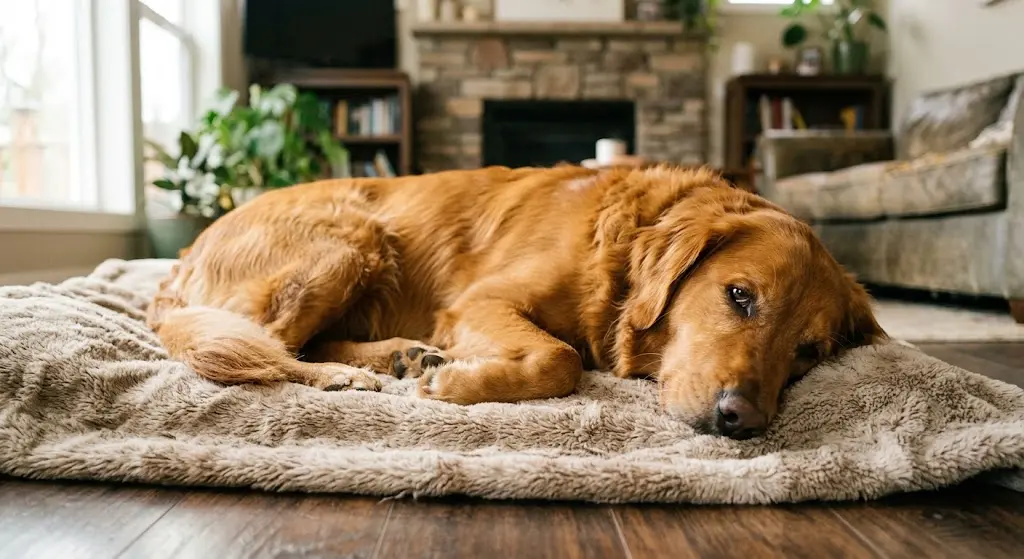
Have you ever caught your dog sleeping with eyes open late in the evening? The house is completely quiet, the lights are dimmed, and you are unwinding on the couch with your favorite blanket. You look down at your sweet dog resting on the rug by your feet. At first glance, everything feels wonderfully peaceful—their tail gives a soft thump, their paws twitch gently, and they let out a tiny, contented sigh.
Then, you take a closer look, and your breath catches in your throat. Their eyes are half-open, staring blankly into the room, and there is a cloudy, pale film sliding across the eyeball. Your mind immediately races: Are they okay? Are they in pain? Can a dog actually rest like this?
If your heart skipped a beat, take a gentle, deep breath. You are not alone in this scare. Almost every devoted pet parent has knelt down on the living room floor in the middle of the night wondering about a dog sleeping with eyes open. It can look startling—almost like something out of a spooky movie—but in the vast majority of cases, it is simply a reflection of how deeply relaxed and safe your pup feels beside you. Let’s sit down together, unpack what is really going on beneath those sleepy eyelids, and bring you complete peace of mind. 🐾
1. What Happens in Your Dog’s Brain During Sweet Dreams (REM Sleep)
Just like us, dogs experience deep sleep cycles. After settling down, they move from a light doze into the magical stage of sleep known as Rapid Eye Movement (REM). This is where your pup replays their favorite moments of the day—that exciting squirrel chase in the backyard, catching their favorite squeaky ball, or greeting you at the front door.
During REM sleep, their little bodies completely let go. Every muscle goes floppy, and the delicate facial muscles around their eyes soften entirely. Because their nervous system is totally at rest while their brain is happily busy dreaming, the eyelids can naturally part. If you notice your dog sleeping with eyes open accompanied by soft whimpers, twitching whiskers, or running paws, your dog is having a restorative, beautiful dream.
2. That Mysterious “Cloudy Film”: The Third Eyelid at Work
One of the scariest moments for any dog mom or dog dad is spotting what looks like a cloudy, pinkish skin covering the eye while their dog naps. In the veterinary world, this is known as the nictitating membrane, but you can simply think of it as your dog’s built-in protective blanket.
Dogs have an extra eyelid nestled safely in the inner corner of each eye. When they drift into deep slumber, this protective layer gently slides across the eyeball to keep the delicate cornea moist and shield it from dust, pet dander, or carpet fluff. When your dog’s outer lids relax and part, you are simply seeing this marvelous natural defense doing its job to keep their eyes healthy.
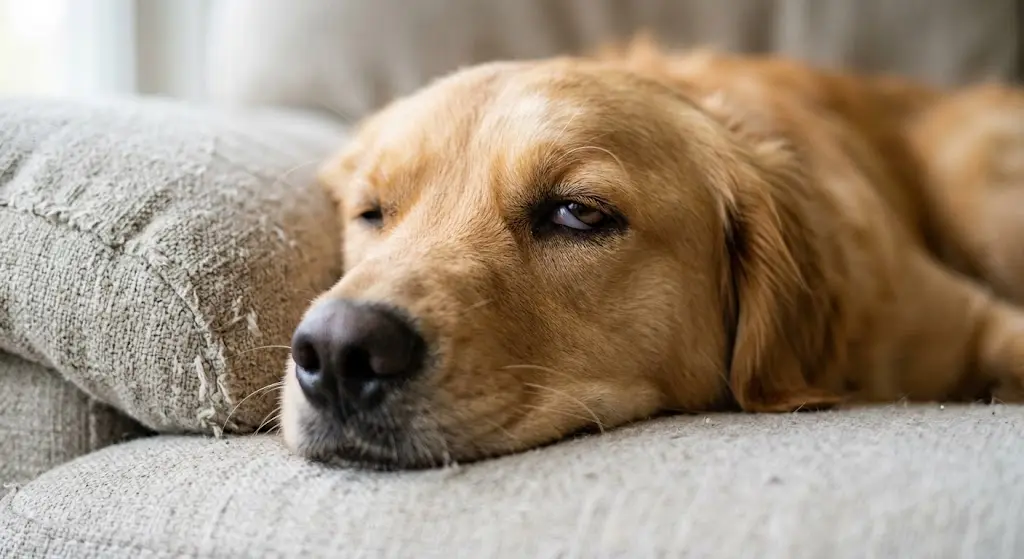
3. Why Is Your Dog Sleeping With Eyes Open? Ancient Survival Instincts
Long before our pups had plush orthopedic beds, soft rugs, and loving homes, their wild ancestors lived under the stars. In the wild, danger could approach quietly from any direction, and sleeping completely dead to the world was a risk.
Nature gifted canines with a subtle survival superpower. Resting with eyelids slightly unsealed allows their retinas to sense sudden shifts in light, shadows, or movement without fully waking them up. While your fur baby knows they are 100% safe in your living room, those ancient instincts are still woven into their DNA. If you have ever wondered about your pup’s resting quirks, learning more about what your dog’s sleeping position says about their trust in you can reveal so much about how secure they feel in your home.
4. Facial Anatomy: Why Some Pups Nap With Eyes Open More Often
Every dog is beautifully unique, and sometimes their physical features naturally make their eyes peek out while sleeping:
- Flat-Faced Sweethearts: Breeds like French Bulldogs, Pugs, Boston Terriers, and Boxers have charming, short snouts and large, expressive eyes. Because their eye sockets are naturally shallow, their eyelids have to stretch a bit more, making it very common for them to nap with their eyes partly open.
- Hound Dogs and Gentle Giants: Dogs with loose, velvety skin or droopy jowls—like Basset Hounds, Bloodhounds, and Great Danes—often show their third eyelid more prominently when their facial muscles melt into sleep.
5. Trusting Your Gut: When to Stay Calm vs. When to Call the Vet
As pet parents, our intuition is powerful. While a dog sleeping with eyes open is normal and harmless 95% of the time, it helps your heart to know the difference between sweet dreaming and a genuine health concern:
- Sweet, Normal Rest: Your pup’s body is soft and loose. If you gently whisper their name or place a comforting hand near their chest, they blink, stretch, yawn, and happily greet you with a wagging tail.
- Seizure or Neurological Warning Signs: During an actual seizure, a dog’s body becomes rigid and tense rather than relaxed. Their legs may paddle stiffly, their jaw might lock, they may drool heavily or lose bladder control, and they will not respond to your voice. Once it stops, they often seem disoriented for several minutes. If you ever observe stiffness or total unresponsiveness, reach out to your veterinarian right away.
- Eye Irritation or Dryness: If their eyes look red, swollen, or have goopy discharge when they are wide awake, their eyes may need soothing drops prescribed by your vet to keep them comfortable. If your dog seems uneasy through the hours of darkness, our guide on gentle ways to soothe a restless dog at night can help you create a calmer evening routine together.
How to Help Your Pup Enjoy the Most Restful Sleep
If you catch your pup napping with their eyes half-open, there is no need to shake them awake or worry. Waking a dog suddenly from deep dreamland can startle them. Instead, you can create a calming haven with these tender touches:
- Soften the Evening Lights: Dim overhead lamps in the evening. Soft, warm lighting helps keep their resting eyes relaxed and signals to their body that it is time to unwind.
- Add Gentle Moisture to the Air: If the air in your home feels dry from winter heating or summer air conditioning, a quiet room humidifier works wonders to keep their eyes comfortable while they rest. For clinical guidelines on canine ocular health, veterinary associations like the American Kennel Club Eye Care Guide emphasize the importance of gentle hydration and clean sleep environments.
- Offer an Ergonomic, Supportive Bed: A soft, bolster-style orthopedic bed supports your dog’s head, relieves neck pressure, and allows their entire face and body to relax completely into dreamland.
The next time you spot your precious companion dozing with their eyes softly peeking out, you don’t have to hold your breath. Smile softly, know that they are simply lost in a happy dream world, and cherish the peaceful bond you share. When they wake up with that big stretch and sleepy tail wag, give them a warm cuddle—they know they are safe with you. 🐶❤️

Andrea Frota is the creator of Dog In Focus, a blog dedicated to helping dog owners better understand dog behavior, training, health, and everyday care. Through carefully researched articles and practical guidance, Andrea shares helpful information to support responsible and confident dog ownership.